Why SAP Accounting & Bookkeeping Services Are Gaining Popularity in 2025
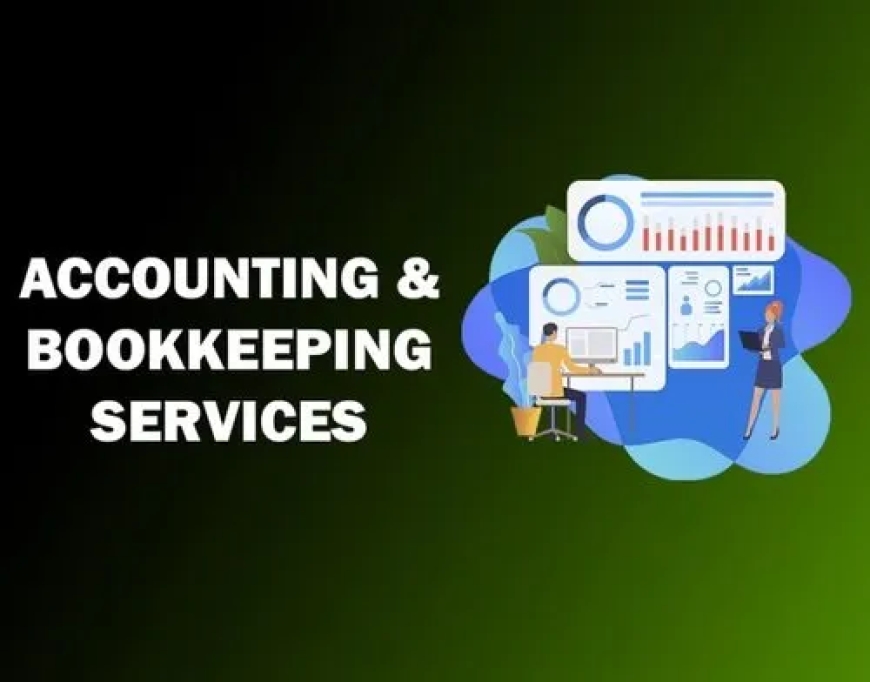
In todays fast-paced digital world, businesses are evolving rapidlyand so are their financial processes. Traditional accounting tools are no longer enough to keep up with real-time demands, compliance complexities, and the need for actionable insights. As a result, SAP accounting and bookkeeping services have emerged as the go-to solution in 2025 for companies seeking accuracy, control, and efficiency.
But what exactly is driving this shift toward SAP-based financial management? In this blog, we explore the key reasons why SAP accounting and bookkeeping services are rising in popularity and how theyre transforming modern businesses across industries.
What Are SAP Accounting & Bookkeeping Services?
SAP (Systems, Applications, and Products) is a leading ERP (Enterprise Resource Planning) system used globally to manage business operations, including finance, HR, supply chain, and more. Within SAP, the Financial Accounting (FI) and Controlling (CO) modules handle all aspects of accounting and financial reporting.
SAP accounting and bookkeeping services involve leveraging this software to manage everything from general ledger entries to accounts payable and receivable, tax compliance, asset tracking, and real-time financial reporting.
These services can be managed in-house or outsourced to specialized firms offering end-to-end SAP financial solutions.
1. Real-Time Financial Data Is No Longer Optional
In 2025, businesses cant afford to wait for end-of-month reports to understand their financial position. SAP offers real-time data visibility, allowing CFOs and finance teams to make quick, informed decisions.
With SAPs integrated dashboards and instant reporting tools, businesses get access to:
-
Current cash flow status
-
Budget utilization
-
Real-time profit and loss tracking
-
Up-to-the-minute bank reconciliations
This level of financial agility is a game-changer for businesses operating in competitive markets or managing multiple revenue streams.
2. Automation Reduces Errors and Saves Time
Manual data entry and spreadsheets are not only time-consumingthey're also error-prone. SAPs automation features eliminate repetitive tasks such as:
-
Invoice processing
-
Payment reconciliations
-
Tax calculations
-
Journal entries
This results in higher accuracy, reduced operational costs, and faster turnaround times. In 2025, automation isnt a luxuryits a necessity for businesses that want to scale without increasing overhead.
3. Seamless Compliance and Audit Readiness
With governments around the world tightening compliance requirements, financial reporting must be precise, timely, and transparent. SAP comes with built-in tools for:
-
GST/VAT compliance
-
IFRS and GAAP standards
-
Audit trails
-
Regulatory reporting
This ensures businesses are always audit-ready and protected from penalties or fines. SAPs structured data environment also makes it easier to generate clean, compliant reports on demand.
4. Globalization Demands Standardized, Scalable Solutions
As more companies expand globally or adopt remote and hybrid work models, financial processes need to be consistent across borders. SAP enables:
-
Multi-currency accounting
-
Localization for tax laws and regulations
-
Centralized global financial reporting
With businesses operating across countries and time zones, SAPs ability to scale and maintain consistency is a major reason for its growing popularity in 2025.
5. Outsourced SAP Services Deliver Cost-Effective Expertise
More companies are choosing to outsource their SAP accounting and bookkeeping to specialized providers. These firms offer:
-
Certified SAP experts
-
Round-the-clock support
-
Flexible pricing models
-
Access to the latest SAP tools and updates
Outsourcing helps companies reduce recruitment, training, and infrastructure costs while gaining access to experienced professionals. This trend is especially strong among small and mid-sized enterprises (SMEs) that want enterprise-grade finance without the enterprise-level cost.
6. Better Decision-Making Through Analytics
SAP accounting tools go beyond bookkeeping they offer business intelligence and analytics. Finance teams can create:
-
Predictive financial models
-
Cash flow forecasts
-
Profitability analysis
-
Cost center performance reports
These insights help leaders make data-backed decisions that improve margins, optimize spending, and guide strategic planning.
7. Integration Across Departments
One of the standout features of SAP is its cross-functional integration. Financial data is seamlessly linked with:
-
Inventory and procurement systems
-
Sales and CRM tools
-
Payroll and HR modules
This interconnected ecosystem allows businesses to track the full financial impact of every operational activityin real time. This unified view helps improve collaboration between departments and eliminates data silos.
8. Security and Data Integrity
In 2025, cyber threats are more advanced than ever. Businesses need secure, compliant systems for financial data. SAP offers:
-
Role-based access controls
-
Encrypted data storage
-
Regular backups and audit trails
-
GDPR and HIPAA compliance tools
These features ensure your financial data stays secure while maintaining accuracy and traceability.
9. Customization and Flexibility
No two businesses are alike, and SAP recognizes that. The platform offers a high level of customization:
-
Tailored dashboards
-
Industry-specific templates
-
Custom reports and workflows
-
Flexible module selection
This adaptability is one reason why SAP services are now popular across diverse industriesfrom healthcare and manufacturing to retail, logistics, and IT.
10. Future-Proofing with SAP S/4HANA
The shift to SAP S/4HANA, SAPs next-gen ERP suite, has further accelerated adoption in 2025. With features like AI-powered automation, machine learning, and cloud-based deployment, S/4HANA provides a future-ready foundation for modern finance.
Businesses looking to stay ahead of digital transformation are quickly migrating to SAPs newer platforms to gain an edge in performance, speed, and innovation.
Final Thoughts
The rise of SAP accounting and bookkeeping services in 2025 reflects a broader movement toward smarter, data-driven, and automated finance functions. As businesses face tighter margins, greater compliance demands, and rapid global expansion, SAP stands out as a reliable and scalable solution.
Whether you're a CFO aiming to modernize your finance department or a business owner looking to streamline operations, now is the time to explore how SAP services can work for you.