Learn OOPs Interview Questions Today: The Ultimate 25-Question Practice List
OOPs (Object-Oriented Programming) interview questions

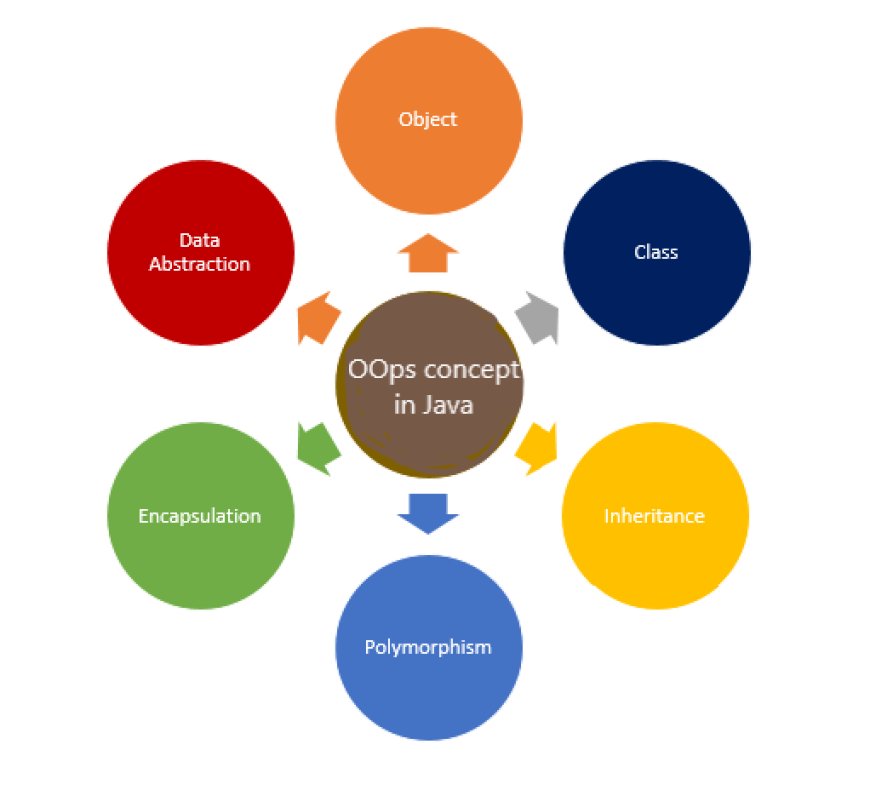
If you’ve ever sat in a technical interview, you know the feeling—your palms sweat, your mind races, and suddenly even the simplest concepts feel like they’ve flown out the window. For many developers, OOPs (Object-Oriented Programming) interview questions fall into this category. They seem straightforward on the surface, but under pressure, they can quickly trip you up.
When I was preparing for my very first Java interview, I remember being asked, “Can you explain polymorphism with a real-world example?” My brain froze for a second. I had studied it, of course, but the stress made me doubt myself. That’s when I realized: practicing these questions regularly, in a structured way, is the only way to get confident.
That’s why today, we’re going to make it simple. If you want to learn OOPs interview questions today, this list of 25 essential practice questions will help you not just memorize concepts, but also explain them clearly in your next interview.
Why OOPs Interview Questions Matter
Whether you’re applying for a fresher role or aiming for a senior developer position, OOPs principles are the backbone of programming in languages like Java, C++, C#, and Python. Interviewers often use them to check if you really understand coding at its core.
Think of it this way: If coding is about building houses, then OOPs is like knowing how walls, doors, and foundations come together. Without it, your “house” may not stand for long.
The Ultimate 25-Question Practice List
Here’s the curated list you can start practicing today.
Basic-Level Questions
-
What are the four main principles of OOP?
-
Can you explain encapsulation with an example?
-
What is inheritance, and why is it useful?
-
Define polymorphism. Give a real-world analogy.
-
What is the difference between a class and an object?
-
Can you explain abstraction in simple terms?
-
What are constructors in Java/C++?
-
What’s the difference between method overloading and overriding?
-
What is the purpose of the this keyword in Java?
-
What is the difference between == and .equals() in Java?
Intermediate-Level Questions
-
What is multiple inheritance, and how does Java handle it?
-
Can an abstract class have a constructor?
-
What are interfaces, and how are they different from abstract classes?
-
How does Java achieve abstraction?
-
Can you override a private or static method? Why or why not?
-
Explain runtime vs compile-time polymorphism with examples.
-
What are access modifiers? Give practical use cases.
-
What is the difference between aggregation, composition, and association?
-
How do you achieve encapsulation in Java?
-
What is a copy constructor, and when is it used?
Advanced-Level Questions
-
What are inner classes in Java, and when should you use them?
-
How does Java handle diamond problem in multiple inheritance?
-
What is object cloning, and how is it implemented?
-
Can you explain SOLID principles and their relation to OOPs?
-
How does garbage collection relate to OOP concepts in Java?
Tips to Ace These Questions
-
Don’t just memorize definitions. Interviewers often ask you to explain OOPs concepts with real-world analogies. Practice answering in your own words.
-
Write code snippets. Even if it’s just a few lines, code examples make your answers stronger.
-
Keep it conversational. Avoid sounding like you’ve memorized a textbook. Instead, explain as if you’re teaching a junior developer.
-
Practice mock interviews. The best way to learn OOPs interview questions today is to simulate real scenarios with a peer or mentor.
Conclusion
Learning OOPs concepts is not just about cracking interviews—it’s about becoming a better developer. Once you can confidently explain encapsulation, inheritance, or polymorphism, you’ll find that writing clean, maintainable code becomes second nature.
So here’s your challenge: Don’t just skim through this list. Pick five questions today, write down your answers, and practice saying them out loud. By the time your next interview comes around, you won’t just be answering questions—you’ll be telling a story that makes sense to you and to your interviewer.