


























How Do Local Lead Generation Services Compare to Traditional Marketing?
In the fast-paced business world today, businesses are in continuous search for means of reaching their target markets more effectively.

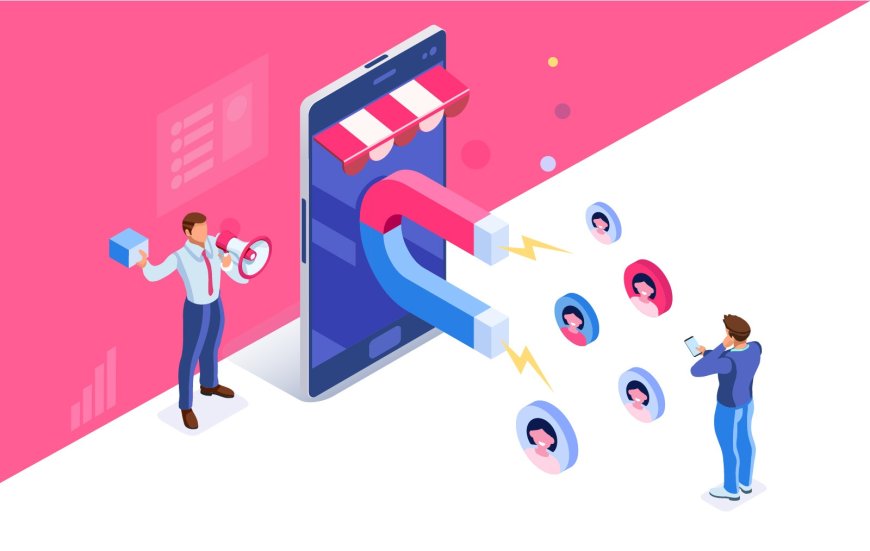
In the fast-paced business world today, businesses are in continuous search for means of reaching their target markets more effectively. This growth in marketing has created new ways, and one of these is local lead generation services, which have become strong means of outreach for small to medium businesses. Meanwhile, conventional methods of marketing like print, radio, TV, and direct mail are still very much in practice. Although both are strong, they can be effective differently, depending on the industry, audience, and intended objectives. In order to really know how they differ, it's best to look at how they differ in areas that are important to businesses.
Following are 10 key areas where local lead generation services excel compared to traditional marketing, topped by an all-encompassing conclusion.
1. Targeting Precision
Telemarketing tends to cast a wide net as well. For instance, a local advertisement in a newspaper could be seen by thousands of people, but few would be likely to be potential buyers. In the same way, TV or radio commercials reach large audiences with no direct interest in the good or service.
In contrast, local lead generation services provide laser-targeted targeting. These services use online instruments and data science to obtain the contact information of individuals genuinely in search of products or services within a designated region. For example, a roofing firm can generate leads by focusing on homeowners online looking for "roof repair near me." Rather than paying for unwilling listeners, companies get in touch with those most apt to make a conversion.
2. Cost-Effectiveness
Marketing budgets are always a priority for companies, particularly small ones. Print ads, billboard advertisements, and television commercials are some of the old-school marketing techniques, which can prove to be costly, with prices ranging into thousands for a single advertising campaign. Also, companies pay for visibility, not always for success.
Local lead generation agencies, on the other hand, tend to work on a pay-per-lead or subscription basis. That is, companies pay only for quality leadsindividuals who are already interested in their products. In the long run, this translates into an exponentially higher return on investment (ROI) as money is being spent on gaining potential customers rather than just shooting out a message.
3. Measurability and Analytics
One of the downsides to traditional marketing is the inability to measure success. While companies can guess at the exposure of a radio ad or magazine promotion, they can't actually see how many customers were spurred to action as a result. This kind of uncertainty makes it challenging to optimize campaigns or know what's really working.
Conversely, local lead generation services offer transparent, quantifiable analytics. Companies can monitor metrics such as cost per lead, conversion rates, and customer acquisition costs in real-time. This data-driven model enables ongoing improvement, such that marketing strategies change according to customer behavior and preferences.
4. Speed of Results
Conventional marketing can take longer to bear fruit. A mailer campaign could take weeks to design, print, and mail, and the response rate can turn out to be lower. Likewise, billboard or television campaigns can take months before sales changes are realized by businesses.
Local lead generation solutions provide the results far more quickly. Businesses can begin receiving leads in days or even hours with appropriate digital campaigns. A local dentist, for instance, offering a lead generation campaign can bring in new patients looking for dental services in their locality with immediate effect. The speed-to-market factor provides businesses with the ability to move rapidly and take advantage of opportunities as and when they present themselves.
5. Scalability and Flexibility
Traditional marketing campaigns tend to scale with considerable expenses and complexities. For example, to increase print media coverage requires increased printing and distribution costs, and increasing television campaigns entails additional airtime. Once locked in, companies have limited room to maneuver and change campaigns halfway through.
Local lead generation services are extremely scalable and agile, though. A small firm can begin with a low budget, pilot campaigns, and expand as performance gets better. Moreover, campaigns can be suspended, tweaked, or reallocated in an instant depending on performance. Such flexibility proves invaluable in markets that change very quickly.
6. Local vs. Broad Reach
Conventional marketing tends to favor mass exposure. Although this can be advantageous for big companies to establish brand awareness, it might not be financially viable for small enterprises that cater only to a geographic area. For instance, a local plumbing service doesn't stand to gain from television commercials reaching thousands of non-customers beyond their own service boundary.
Local lead generation platforms are created with geo-targeting features. They target prospects solely within a specific radius or area, making the business utilize resources only on prospects in their service territory. The hyper-local targeting guarantees increased relevance and conversion rates than those of blanket campaigns.

7. Customer Engagement and Relationship Building
Traditional marketing is mostly one-waycompanies send out their messages and wait for customers to react. There is little interaction, and customers feel like they're passive receivers of advertising.
Local lead generation services, however, facilitate two-way interaction. When leads submit forms, inquire about information, or ask questions, companies can answer back personally and establish rapport and trust. This rapport-building factor not only enhances the conversion rate but also enhances customer loyalty. In the current customer-focused world, the capability to communicate directly with leads is an important competitive edge over conventional methods.
8. Personalization Opportunities
Personalization in direct marketing is limited. A given ad, for instance, a magazine ad or flyer, appears the same to all readers no matter their individualized interests or needs. Businesses can segment to a degreesuch as selecting select publicationsbut are not able to customize messages to specific individuals.
Local lead generation businesses survive on one-on-one communication. Information gathered through lead forms helps companies personalize follow-ups according to the demographics, interests, or behavior of customers. A real estate agent, for example, can personalize messages in different ways for first-time homebuyers versus investors. Personalization at this level gives more value to the customer and boosts conversion rates heavily.
9. Short-Term Impact vs. Long-Term Value
Conventional promotional campaigns are also short-term in terms of effect. A billboard will be noticed while on display, but when removed, its effect is lost. Likewise, a radio or television commercial is effective only as long as airtime is leased. Companies are forced to re-invest constantly to stay in front of consumers.
Local lead generation companies can deliver more lasting, sustainable value. Through creating a database of leads, companies build an asset that is cultivated over the long term. Even if prospects do not convert right away, they are in the pipeline for future contact. This ongoing building of relationships guarantees that companies have a steady stream of opportunities many years after the initial campaign.
10. Learning from Consumer Behavior
Consumers' behavior has changed radically in the online era. Individuals rely more and more on search engines, reviews online, and social media to discover products and services. Traditional advertising has trouble keeping up with this transformation, as audiences consume less time reading print content or watching broadcast commercials.
Local lead generation services are a perfect fit with today's consumer behavior. They match businesses up with prospects when they are actually looking for solutions. Be it a homeowner who is searching for landscaping service or a family seeking a local eatery, lead generation grabs intent-driven traffic. This matching ensures greater relevance and success rates than older methods that might not catch the attention of today's digitally savvy consumers.
Conclusion
When comparing local lead generation services to traditional marketing, the contrasts are stark. Traditional methods are still useful, particularly for wide brand awareness and targeting older audiences, but they tend to lack specificity, agility, and measurable return on investment. Local lead generation services, on the other hand, are economical, data-focused, and very targeted, allowing businesses the power to reach customers who are ready to buy.
The development of marketing mirrors the development of consumer behaviorindividuals now expect relevance, personalization, and real-time solutions. Local lead generation services with the best online marketing company provide all these in spades, providing speed, scalability, and sustainable value. For local companies seeking to expand into competitive spaces, depending on traditional marketing alone may no longer suffice. Instead, combining contemporary lead generation services with judicious traditional methods can yield a balanced approach that achieves the most reach while maintaining efficiency.
Ultimately, business expansion's future relies on finding the correct equilibrium. Traditional marketing establishes wide awareness, yet local lead generation provides targeted precision and quantifiable outcomes. Together, they can create a formidable hybrid approach that enables businesses to flourish in the physical world and digital world of the modern marketplace.


