Common Challenges in ETL Testing Explained With Solutions
Discover common ETL testing challenges and practical solutions to ensure data accuracy, scalability, and reliable analytics for smarter business decisions.

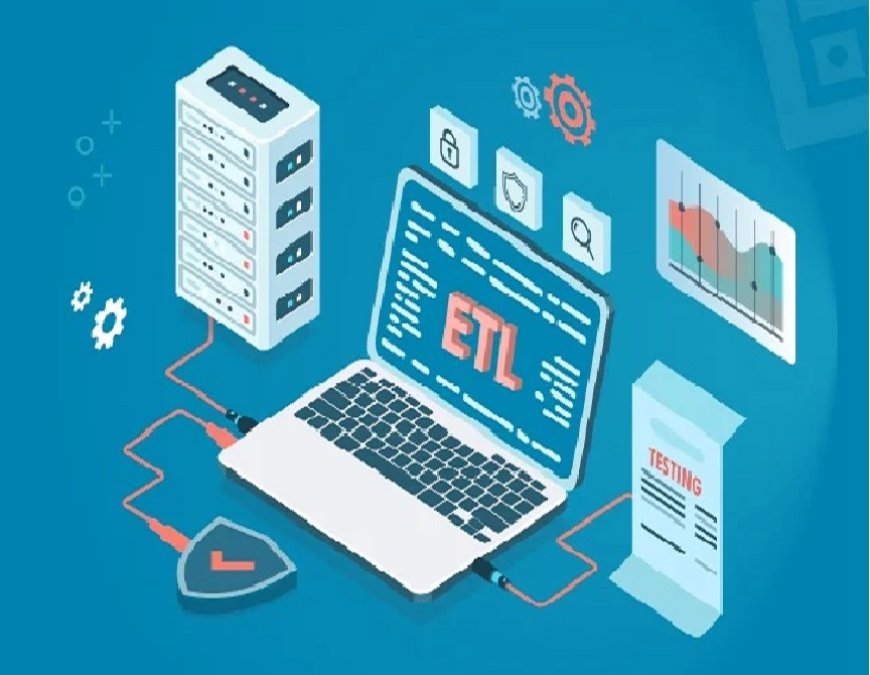
Extract, Transform, Load (ETL) testing is critical to the successful flow of information through source systems to data warehouses to ensure it is accurate and consistent. The role of good data pipelines cannot be highly underrated, as businesses increasingly rely on data to inform reporting, analysis, and decision-making.
Nevertheless, ETL testing is an essential process, which is frequently accompanied by several issues that may affect its efficiency and reduce the quality of data. The awareness of these problems is the initial step toward the development of stronger ETL processes.
The Importance of ETL Software Testing
Organisational decisions are reliant on data and quality information, which is consistent and timely. ETL automation testing is used to verify that a process of data extraction, transformation, and loading is functional. In its absence, any kind of error may go unnoticed, leading to poor analytics, inaccurate reporting, and expensive business decisions.
When reports are produced based on inaccurate data, financial institutions must take the risk of non-compliance. This example underscores the need to have ETL testing as a component of data management and governance.
Common Challenges Faced During ETL Testing
Let us take a look at the most common challenges that are faced by an ETL tester and the most effective solutions to tackle them:
1. Complex Data Transformations
Testing of complex transformation logic is one of the most significant problems associated with ETL testing. Business rules, aggregations, and conversions that are part of the ETL processes should be adequately tested. ETL testers should ensure that the changes in data are addressed according to the rules of business and deal with rare instances. Even minor errors may lead to enormous problems in reports.
Solution: Write out transformation rules and generate data that gives the appearance of real data. Continued testing of those rules using automated ETL tests to ensure the logic is correct and queues errors.
2. Data Volume and Scalability Issues
ETL pipelines often include millions of records. It is both resource-consuming and time-consuming to review a large amount of data to verify its accuracy. This can be assisted by automated ETL tests, but it remains challenging in terms of size and accuracy. Big data is also in danger of falling victim to errors unless there is a proper check.
Solution: Check by eye inspection and automation. Faster purchasing tools and quicker questioning of the system to guarantee that it keeps expanding without any backdrop on precision.
3. Inconsistent Data Sources
The enterprises of the present day draw information across an enormous amount of sources, such as structured databases, flat files, APIs, and unstructured data. Having uniformity in all these forms is complex and must be validated keenly. ETL software testing should have cross-system testing to ensure that there is no loss or distortion of information during integration.
Solution: Consolidate data formats where feasible and introduce automated processes for consolidating the sources. Business analysts and ETL testers are to collaborate with each other in order to ensure that mappings are per business needs.
4. Performance Bottlenecks
Time is a serious issue during ETL processes, particularly when data is required to be made available daily for reporting/analytics. ETL pipelines may have a bottleneck leading to delays, which spread throughout the organization. An ETL tester ought to monitor the duration of the processes, identify slow queries, and enhance transformation processes to ensure that the deadlines are never missed.
Solution: Regularly performing testing and monitoring of performance is crucial for identifying slow points early on. Maximize queries and index necessary tables, and take advantage of parallel processing to maximize the efficiency of ETL.
5. Data Quality and Accuracy
One of the most prevalent problems in ETL testing is poor-quality data. Duplicates, missing values, or corrupted data impact the reliability of the reports. The data quality also needs to be checked along with the correctness of transformations by ETL testers. This makes sure that the analytics provide reliable information to the stakeholders.
Solution: Establish built-in data quality checks to identify bad values, duplicates, and missing values. Develop a standardized set of cleaning and enriching data rules to prevent data of lower quality from being reported.
6. Lack of Proper Test Automation
Organizations continue to use manual ETL testing, which is relatively time-consuming and prone to errors in many organizations. ETL automation testing systems have the potential to enhance accuracy, minimize human error, and increase the speed of validation. In the absence of automation, teams struggle to keep pace with the rapid rates of data loading and evolving business needs.
Solution: Implement ETL automation testing frameworks to streamline repetitive checks. Automatic regression checking allows consistency over cycles, and the ETL testing team spends code on more difficult checks.
7. Environment and Tool Limitations
Utilizing test systems may not reflect the live system, and that results in new ETL results. The tools also lack sophisticated big data testing capabilities. Tests require maintenance of an unchanged environment, unlike live missions on data.
Solution: Effort to make the test and production environments similar. Select ETL tools that perform sound validation and refresh the environments frequently to prevent variations.
Best Practices to Tackle ETL Testing Challenges
While ETL automation testing challenges are common, they can be addressed with the right strategies and approach:
-
Data profiling and data validation are used to maintain data accuracy and completeness.
-
Introduce an ETL automation testing solution to facilitate large-scale and repetitive validations.
-
Continuous performance monitoring should be kept to observe bottlenecks at the earliest stage.
-
Balance the simulation of conditions to minimize the differences between staging and production.
-
Interconnect business analysts and developers to ensure the transformation logic meets business satisfaction.
Conclusion
ETL testing is considered necessary in the establishment of credible data paths to provide credible reporting and facilitate decision-making. Despite the complexity of the process, which is hindered by challenges such as the inability to simplify it through complex transformations, massive volumes of data, and unreliable sources, all these problems can be addressed using formalized methods and testing software.
By investing in ETL software testing, leveraging automation, and empowering ETL testers with the right resources, organizations can ensure their data remains trustworthy, consistent, and ready to drive business success.