Can AI Predict Your Next Move?
Learn how AI predicts what you might do next. Simple explanations, examples from daily life, and expert thoughts show how prediction works and its limits.

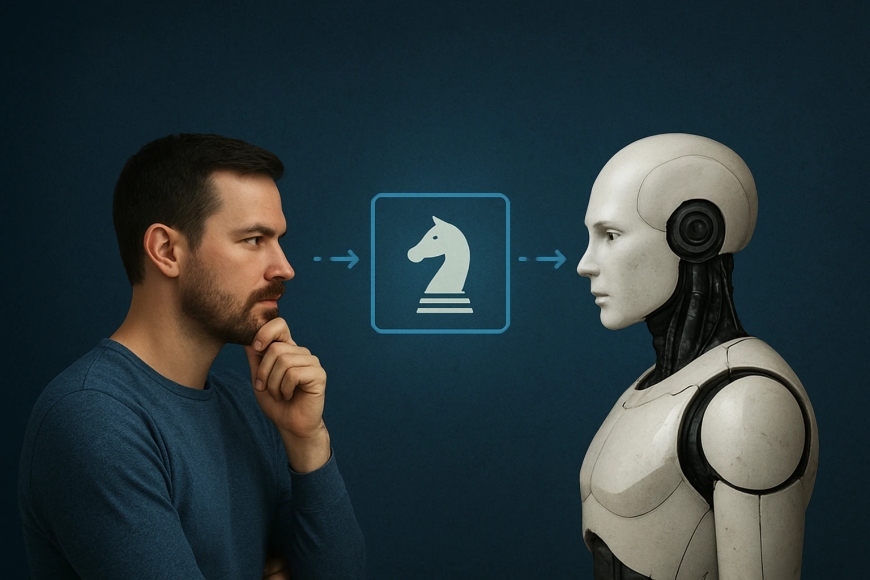
Have you ever felt like your phone or computer knows you very well? Maybe YouTube shows you a video you like before you even search for it. Maybe your phone tells you where you are going before you type it. Sometimes it feels like the machine can read your mind. This is because of AI, which stands for Artificial Intelligence.
AI is like a very smart helper. It cannot think like a human, but it can look at many facts and make good guesses. It can say, Maybe you will do this next. The rise of AI power is the reason we see these smart predictions every day. But the big question is: Can AI really predict your next move? Lets talk about this in very easy words.
What Does Prediction Mean?
Prediction means making a smart guess about the future. For example:
-
If the sky is full of dark clouds, you predict it will rain.
-
If your friend is running very fast, you predict they will win the race.
-
If your mom puts bread in the oven, you predict soon there will be yummy toast.
Prediction is not magic. It is looking at clues and guessing what will happen next. AI works the same way.
How AI Makes Predictions
AI needs something called data. Data is just information. It is like clues. When you watch a cartoon, buy a toy, or search on Google, you give data. AI takes all that data and looks for patterns. That is how it makes guesses about what you might like or do next. In a way, we work with AI all the time, even without noticing it; every click, search, or choice helps it learn more.
For example:
-
If you eat ice cream every Sunday, AI will guess that you will eat ice cream next Sunday too.
-
If you always watch superhero movies, Netflix will show you more superhero movies.
-
If you go to school at 8:00 every day, Google Maps will guess your school is the place you are going again tomorrow.
So, AI doesnt read your mind. It just looks at what you did before and makes a guess.
The Science Behind AI Prediction
AI does not just guess randomly. It uses special ways to learn.
Supervised Learning: This is when AI is trained with examples. Imagine a teacher showing you many pictures of cats and dogs. After practice, you can say which is a cat and which is a dog. AI learns like that too, but with data.
Reinforcement Learning:This is like a game. AI makes a guess. If it is right, it gets a reward. If it is wrong, it gets punished. Over time, it learns to make better guesses, just like you learn from mistakes.
This is how AI becomes better at predicting our moves.
Real-Life Examples of AI Predictions
AI predictions are all around us, even if we dont notice.
Ads on the Internet: When you open Facebook or YouTube, you see ads for things you like. This is not luck. AI guessed what you may want to buy.
Netflix and YouTube: When you finish watching one YouTube video, another pops up. AI thinks, This is what you want next.
Google Maps: Sometimes Google Maps shows your school or office before you type. It guesses because you often go there.
Healthcare: Doctors use AI to guess who might get sick in the future. This can help them stop the sickness early.
Games: When you play video games, the computer players seem very smart. They watch how you play and try to guess your next move.
Expert Opinions About Predictive AI
Experts,very smart people who study AIdo not all agree.
-
Some experts are happy about AI. They say it makes life easier. For example, Professor Erik Brynjolfsson says AI saves time and money by guessing what people need.
-
Some experts are worried. They say humans are not simple. We have feelings, and we change our minds. Shoshana Zuboff, a writer, warns that companies may use AI not only to predict but to control peoples choices.
-
Some experts focus on ethics. They say AI should help people, not take away their freedom. If AI pushes us too much, it feels like we are not choosing for ourselves.
So, even the smartest experts cannot fully agree.
Can AI Really Know Your Next Move?
The short answer is: sometimes yes, sometimes no.
-
Yes: AI can often guess what you will do. If you eat pizza every Friday, it is easy to guess you will eat pizza again. If you always watch cartoons at night, AI can predict that too.
-
No: AI cannot guess when you decide something new. Maybe you choose salad instead of pizza. Maybe you read a book instead of watching TV. Humans are full of surprises.
AI prediction is like a weather forecast. It often tells the truth, but sometimes it is wrong.
Problems With AI Predictions
AI is smart, but not perfect. It has problems:
Bias in Data: If the data is unfair, the prediction will also be unfair. For example, if police data is unfair to some groups, AI predictions about crime will also be unfair.
Privacy:AI needs a lot of personal data. But not everyone likes to share private things. If too much data is collected, it feels scary.
The Black Box:Sometimes even the creators of AI dont know exactly how it makes a prediction. This is called the black box problem.
Overtrust: People sometimes trust AI too much. If teachers, doctors, or judges follow AI blindly, mistakes can hurt real people.
The Good Side of Prediction
Lets talk about the good things AI prediction can do:
-
It can save time. You dont need to search too much because AI already shows what you like.
-
It can save lives. Doctors can use AI to stop sickness before it becomes serious.
-
It can keep you safe. A car with AI can guess when another car might crash into you and stop quickly.
The Bad Side of Prediction
But prediction also has bad sides:
-
Companies may use it to make you buy things you dont really need.
-
Politicians may use it to show you only one side of a story.
-
If predictions are wrong, people may be punished unfairly.
So, prediction is like a knife. It can cut bread, but it can also hurt if used badly.
The Future of AI Predictions
In the future, AI will become even better at predicting. It may use:
-
AI Voice Bot can listen to your voice to know if you are happy or sad and help.
-
Your face to see if you are angry or tired.
-
Your heartbeat to check if you are stressed.
This could be amazing. Your watch could warn you about sickness before you feel it. Your teacher could change lessons if you look bored. Your car could stop accidents before they happen.
But this could also be scary. If AI knows too much, it may feel like you have no secrets. That is why we need rules and laws.
Do We Still Have Free Will?
Some people worry: If AI can predict what we do, are we still free?
The truth is: Yes, we are free. AI can guess, but it cannot control your heart. It cannot stop you from making a surprise choice. If you always eat pizza but suddenly eat salad, AI will be confused. That is your free will.
AI can suggest. But you are the one who decides.
So, Can AI Predict Your Next Move?
The answer is simple: AI can predict some moves, but not all. It is very good at patterns. It can guess what you might watch, buy, or where you might go. But it cannot guess your surprises, your dreams, or your imagination. You are not just data. You are a human. And humans can always choose differently.
Conclusion
AI prediction is powerful. It works like a weather forecast: often right, but not always. It makes life easier, but it also has dangers. Experts say we must use it carefully.
At its best, AI saves lives and time. At its worst, it can take away privacy and freedom. That is why we must stay in control. AI is a tool, not a boss.
So next time Netflix shows you a movie, or your phone tells you where you are going, remember: AI is just guessing. It does not know you better than you know yourself.
AI can predict many things. But the most important move, the choice to be free and human, is always in your hands.