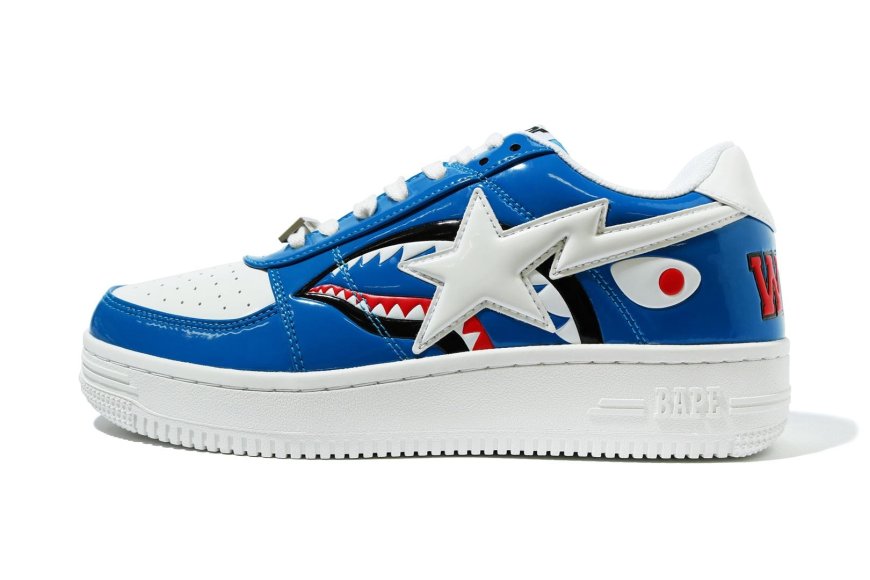
The BAPESTA sneaker, produced by Japanese streetwear powerhouse A Bathing Ape (BAPE), stands as one of the most influential and polarizing sneakers in fashion history. Since its debut in the early 2000s, the BAPESTA has captured the imagination of sneakerheads, celebrities, and streetwear enthusiasts around the world. Its bold designs, unmistakable aesthetics, and deep-rooted cultural associations have solidified its place as a staple in global sneaker culture.
The Origins of BAPESTA
Founded in 1993 by Nigo, BAPE quickly became a symbol of Tokyos vibrant and experimental fashion scene. Influenced heavily by hip-hop, skate culture, and pop art, Nigo set out to create a sneaker that could rival American giants like Nike and Adidas. The result was the BAPESTA, a silhouette closely resembling the Nike Air Force 1 but reimagined with loud colorways, glossy patent leather, and the now-famous star-shaped logo.
The early designs were unapologetically bold. Neon blues, electric pinks, camouflage patterns, and cartoon-inspired graphics set them apart from the more traditional sneakers on the market. The BAPESTA wasnt about subtletyit was a loud declaration of individuality and rebellion against mainstream fashion norms.
A Symbol of Celebrity Influence
One of the most critical factors in BAPESTAs rise to prominence was its endorsement by some of the biggest names in music and entertainment. Pharrell Williams, Kanye West, Soulja Boy, and Lil Wayne were among the early adopters of BAPESTA, frequently seen rocking the shoes in music videos and public appearances.
Pharrell and Kanye, in particular, had a close relationship with Nigo and BAPE. Their collaborations, combined with the sneakers already-growing cult status, helped catapult BAPESTA into the limelight in both the Eastern and Western hemispheres. The BAPESTA became a fixture in early 2000s hip-hop styleshiny, colorful, and exclusive.
Design Identity and Signature Aesthetic
What distinguishes BAPESTA from other sneakers is its unorthodox use of materials and design elements. The glossy patent leather, combined with a rainbow of color choices, gives the shoe a toy-like, collectible appeal. The star motif replacing Nikes swoosh is unmistakable and further strengthens BAPEs brand identity.
Other iconic design cues include the Ape Head logo, often hidden in the sock liner or heel, and the inclusion of BAPEs STA text near the heel. Special editions often incorporated unique prints such as camouflage, shark graphics, and even anime or comic book characters. Each drop was limited, adding an air of exclusivity that intensified consumer demand.
Controversy and Comparison with Nike
Its impossible to discuss the BAPESTA without addressing its similarity to the Nike Air Force 1. While BAPE made no secret of its inspiration, the near-identical silhouette raised eyebrows in the sneaker world. Critics labeled it a knockoff, while supporters viewed it as an homage and a reinterpretation.
Despite this controversy, the BAPESTA avoided legal action for many years, likely due to differences in international trademark laws and the sneaker's limited initial distribution. In the streetwear world, where remixing and reimagining are part of the creative DNA, the BAPESTA's aesthetic didnt hinder its successin fact, it only made it more iconic.
Collaborations and Limited Editions
Part of what makes BAPESTA so desirable is its strategic use of collaborations. BAPE has worked with brands and artists across the globe, including Marvel, Adidas, Comme des Garons, Coca-Cola, and even Pepsi. These partnerships allowed BAPESTA to continually evolve, delivering fresh, collectible sneakers that tapped into multiple fan bases.
Collaborations with music artists often featured customized BAPESTAs that reflected the musicians personal style or album themes. These limited releases would often sell out instantly, fueling resale markets and adding to the sneaker's legendary status. In this way, BAPESTA wasnt just footwearit became a cultural artifact.
Global Expansion and Modern Relevance
While BAPE originated in Tokyo, the brand rapidly expanded its global reach in the mid-2000s. Flagship stores in New York, Los Angeles, London, and Hong Kong introduced the Western market to the BAPESTA in a more accessible way. Each location added its own cultural twist, keeping the brand fresh and regionally relevant.
In recent years, BAPESTA has experienced a resurgence. With retro aesthetics trending again and Gen Zs love for nostalgic Y2K fashion, BAPESTA has re-entered the conversation among sneaker collectors and fashion influencers alike. Revivals of old colorways and new collaborations continue to breathe life into the line, ensuring its longevity in an ever-evolving market.
The BAPESTA Resale Market
Due to limited production runs and high-profile collaborations, BAPESTA has become a coveted item on the resale market. Prices often soar into the thousands for rare or vintage pairs. Collectors value the uniqueness and historic relevance of early releases, and certain colorways have become grails among sneaker enthusiasts.
Platforms that facilitate sneaker resale have made it easier for fans around the world to obtain these rare pairs, albeit at a premium. The high resale value is a testament to the sneakers lasting popularity and cultural capital.
BAPESTA as a Streetwear Legacy
The influence of BAPESTA extends far beyond footwear. It represents a moment in fashion when East met West, when underground subcultures collided with pop culture, and when fashion was more about self-expression than status. It helped lay the groundwork for the luxury streetwear movement, where bold design, limited supply, and celebrity endorsement drive global trends.
BAPE as a brand has diversified with timeexpanding into apparel, accessories, and even childrens wearbut the BAPESTA remains its most iconic offering. Its design, symbolism, and cultural significance continue to inspire new generations of designers and fashion lovers.
Conclusion: A Sneaker Beyond Fashion
BAPESTA is more than just a shoeits a cultural milestone. Its blend of bold Japanese design, American hip-hop influence, and fearless creativity makes it a timeless piece in sneaker history. As streetwear continues to evolve and redefine the boundaries of fashion, BAPESTA remains a beacon of innovation, rebellion, and artistic expression. For those who wear it, the BAPESTA is not just about styleits a statement.