What Campus Management System Software Should Actually Do in 2025
Modern campuses need more than admin tools. Get campus management system software that actually simplifies daily operations and improves student experiences.

Running an academic institution today is more complex than ever. Student expectations are rising, digital learning is now the norm, and compliance demands are increasing across regions.
To stay competitive and organized, institutions must rely on campus management system software that goes beyond basic administrationand actually supports the full student lifecycle with speed, accuracy, and reliability.
The Role of Campus Management Has Changed
Historically, software systems for educational institutions were built only to support administrative functionslike managing enrollment, storing grades, or printing ID cards. Those days are over.
Modern institutions need more than a digital filing cabinet. They need an integrated platform that supports student engagement, real-time communication, financial management, academic scheduling, and automated reporting. Todays best systems function as the operational core of the campus, not just a backend tool.
Core Functions Every Platform Must Handle
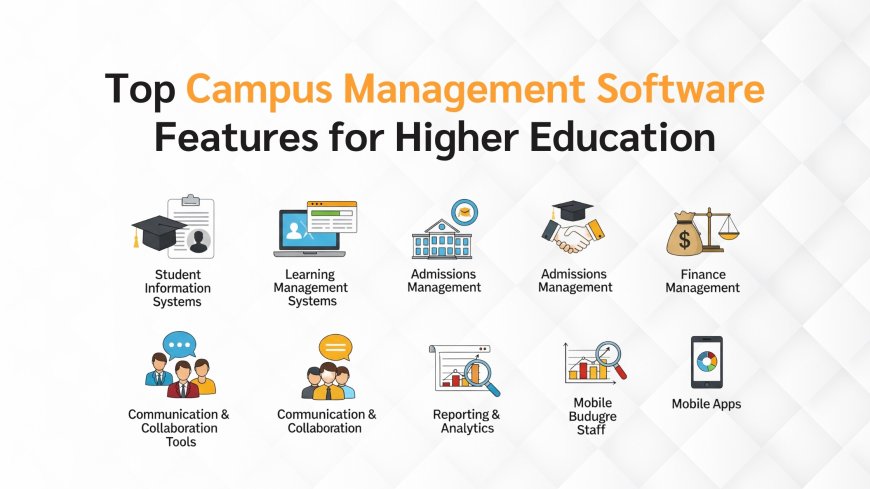
If you're evaluating platforms, the list of features can be overwhelming. But there are five key capabilities that every modern system must deliver.
1. Centralized Student Information Management
This is the foundation. All student-related dataacademic history, course registration, ID numbers, documents, and communication logsmust exist in a single profile. When data lives in multiple, disconnected systems, errors multiply and time is wasted.
A centralized system ensures that student information is available across departments. Whether it's the admissions team checking transcripts or the finance team issuing invoices, everyone works off the same data in real time.
2. Course and Exam Scheduling
Manual scheduling using spreadsheets or legacy systems causes conflicts and confusion. A capable platform allows course creation, timetable planning, and exam slot generation based on faculty availability, course demand, and facility capacity.
The best solutions even detect clashes automatically and recommend alternatives. This reduces the burden on academic planners while improving the experience for students registering for classes.
3. Fee Collection and Finance Management
Schools need to track every tuition payment, grant, or scholarship with precision. A quality system supports online payments, generates invoices, and provides real-time balance updates to both staff and students.
Integrated finance modules also help institutions with budget planning, vendor payments, and tracking operational costs. Automation here reduces errors and ensures that financial records remain clean and auditable.
4. Communication and Alerts
Emails and bulletin boards arent enough anymore. Modern platforms offer role-based portals and real-time alerts that inform students and faculty of assignments, schedule changes, deadlines, or event updates.
Some even integrate with SMS gateways or mobile push notifications to ensure urgent messages get delivered. Effective communication is crucial for student satisfaction and institutional coordination.
5. Analytics and Reporting
From student performance to attendance trends, todays systems must offer dashboards that track key metrics in real time. Data-driven decision-making is no longer optionalits essential.
Platforms should also support compliance reporting, whether for internal governance or external education boards. Scheduled reports, custom filters, and export options are standard in leading platforms.
Mistakes to Avoid During Selection
Choosing the wrong system can create more problems than it solves. Many institutions fall into traps that delay success and increase costs.
-
Buying Without a Demo: Never rely on a PDF brochure. Ask for a live demo and test the workflows with real scenarios from your campus.
-
Ignoring Mobile Accessibility: Todays students expect to access systems from their phones. If the platform isnt mobile-friendly, adoption will suffer.
-
Overlooking Vendor Track Record: Select vendors with proven experience in your region and education levelK12, higher ed, or vocational institutions.
-
Choosing Overly Complex Tools: More features arent always better. If users find it confusing, it wont be used consistently.
Who Should Be Involved in the Decision?
Its not just an IT decision. A good platform impacts nearly every part of the institution, so a cross-functional buying process is a must.
-
Academic Heads: Ensure the software supports curriculum mapping, grading, and outcome tracking.
-
Finance Teams: Confirm the tool manages tuition, scholarships, and payment reconciliation.
-
IT Departments: Check cloud security, integration flexibility, and uptime guarantees.
-
Admissions and Admin Staff: Validate ease of use and workflow automation for their daily tasks.
Involving the right people helps avoid internal resistance and ensures smoother implementation.
What the Best Software Vendors Offer Today
In 2025, the best vendors dont just sell softwarethey deliver long-term partnerships. Look for:
-
Custom onboarding and migration services
-
24/7 technical support and training resources
-
Regular product updates based on user feedback
-
Transparent pricing with no hidden fees
-
User communities or forums for best practices
Ask for references and case studies, and speak directly to schools that are already using the system.
The Future of Campus Operations
The future of education is blended, data-driven, and student-centered. Institutions that fail to modernize risk falling behind. By investing in scalable, intelligent platforms now, schools can position themselves to adapt to growth, change, and rising expectations.
A strong foundation starts with the right digital infrastructure. And that begins with selecting campus software that truly supports every useradministrators, faculty, students, and even parents.
Conclusion
Institutions must stop settling for outdated or one-dimensional tools. The right campus management system software isnt just an IT upgradeits a transformation of how your school operates. When implemented correctly, it removes inefficiencies, improves communication, and strengthens every aspect of the student experience. A better campus starts with better systemsand now is the time to get it right.