Managed SD-WAN Services Pricing Models Explained.
Explore our comprehensive guide on managed SD-WAN services pricing models. Learn how to optimize your network costs while enhancing performance and reliability.
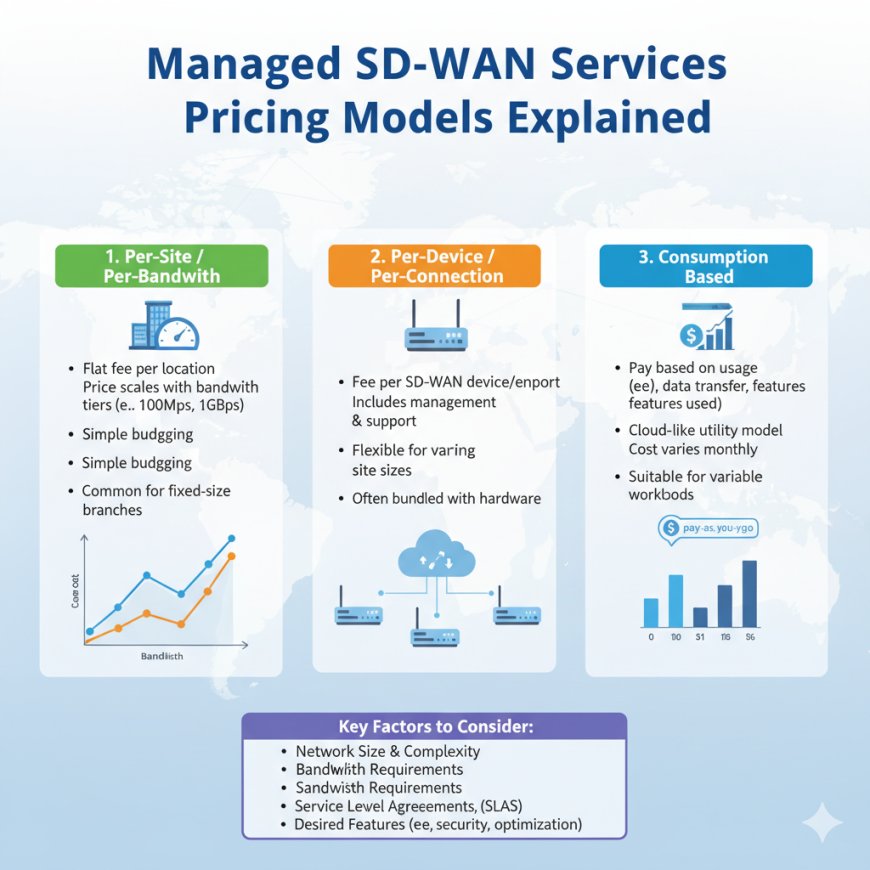
Businesses today rely on fast, secure, and flexible networks to keep operations running smoothly. As organizations embrace cloud applications, remote teams, and high-bandwidth services, Managed SD-WAN services have emerged as a top solution. However, understanding Managed SD-WAN services pricing models can feel overwhelming. In this article, we’ll break down the most common pricing approaches and show how these solutions integrate with other essential services such as managed WiFi services, dedicated fibre internet, best business VoIP solutions, web conferencing software, and telecom expense management services.
Why Managed SD-WAN Services Matter
Managed SD-WAN services provide businesses with a centralized way to manage and optimize their wide area networks. Unlike traditional WAN setups, SD-WAN leverages software-defined technology to route traffic intelligently, improve application performance, and enhance security. When paired with dedicated fibre internet and managed WiFi services, it creates a seamless, high-performance environment for staff and customers.
Common Managed SD-WAN Services Pricing Models
1. Per-Site Pricing
This model charges businesses based on the number of locations connected. Small and medium-sized businesses benefit from predictable costs, while enterprises can negotiate volume discounts. Managed WiFi services and dedicated fibre internet at each site often complement this model, ensuring maximum bandwidth and reliability.
2. Per-Bandwidth Pricing
Here, costs depend on the amount of bandwidth consumed across all sites. This model works well for businesses that experience fluctuating demand or seasonal spikes in internet usage. Pairing this with telecom expense management services can help monitor and control costs effectively.
3. Subscription-Based or As-a-Service Pricing
Many providers offer a monthly or annual subscription model. This all-in-one approach includes hardware, software, installation, and maintenance. Integrating web conferencing software and best business VoIP solutions under the same contract can simplify billing and improve ROI.
4. Hybrid Pricing
Hybrid pricing combines per-site and per-bandwidth billing, offering flexibility for businesses with varied needs. This is ideal for companies operating both large data centers and small remote offices. It’s also a great fit if you’re using managed WiFi services to scale up or down quickly.
Factors Influencing Pricing
-
Number of Sites: More locations typically increase costs.
-
Bandwidth Requirements: High-volume data needs drive pricing higher.
-
Security Features: Advanced firewalls, threat detection, and encryption add to the package cost.
-
Additional Services: Bundling with dedicated fibre internet, best business VoIP solutions, and web conferencing software can reduce overall expenses compared to buying individually.
How to Get the Best Value
-
Bundle Services Strategically: Combine managed SD-WAN services with managed WiFi services, dedicated fibre internet, and telecom expense management services to streamline vendor relationships and negotiate better deals.
-
Evaluate Performance Metrics: Focus on SLAs, uptime, and scalability before signing long-term contracts.
-
Plan for Growth: Choose a pricing model that adapts as your business adds locations or bandwidth.
-
Use Telecom Expense Management Services: These can identify redundant costs and optimize your spend across all communications services.
Final Thoughts
Choosing the right Managed SD-WAN services pricing model is essential for controlling costs and boosting network performance. By understanding per-site, per-bandwidth, subscription-based, and hybrid pricing options, businesses can align their network strategy with their budget. Integrating related services like managed WiFi services, dedicated fibre internet, best business VoIP solutions, web conferencing software, and telecom expense management services can create a comprehensive, future-proof technology ecosystem.