How Facial Recognition & Emotion Analysis Boost Urban Surveillance
Facial recognition & emotion analysis enhance security by identifying individuals and detecting emotional cues for real-time, intelligent surveillance.

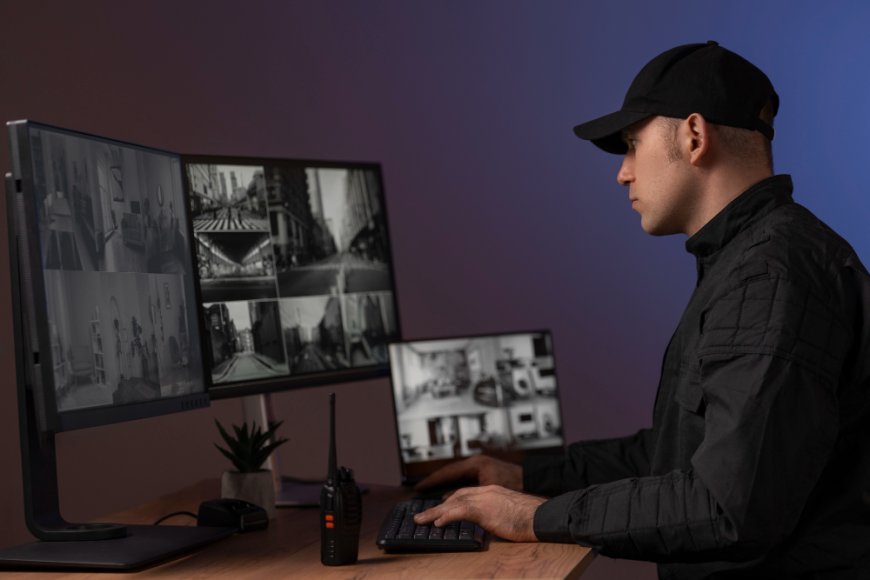
In todays rapidly evolving urban landscape, the complexity of public safety management is intensifying. Cities are expanding, populations are growing, and security concerns are becoming increasingly multifaceted. Against this backdrop, cutting-edge technologies likefacial recognition & emotion analysis are transforming the way urban surveillance systems operate. These innovations are enabling authorities to proactively monitor public areas, prevent crime, and respond swiftly to potential threatsall while maintaining a delicate balance between security and civil liberties.
The Evolution of Urban Surveillance
Traditional surveillance methods, once limited to static CCTV systems, have now evolved into intelligent ecosystems powered by artificial intelligence (AI), machine learning (ML), and big data analytics. The focus has shifted from passive monitoring to proactive threat detection. Within this context, facial recognition and emotion analysis technologies have emerged as pivotal tools in enhancing situational awareness and decision-making capabilities in urban environments.
Facial recognition technology uses biometric data to identify or verify individuals by analyzing facial features. When integrated with emotion analysisa tool that interprets facial expressions to detect emotional states like stress, anger, or fearthe technology provides surveillance operators with deeper behavioral insights. Together, these tools contribute to a more nuanced understanding of human activity in monitored areas.
How Facial Recognition Enhances Security Measures
Facial recognition systems are particularly effective in high-traffic areas such as public transport hubs, government buildings, and commercial complexes. They can scan crowds in real-time, identify persons of interest, and match them against pre-existing databaseswhether for law enforcement purposes or access control.
One of the greatest advantages is speed. In time-sensitive scenarios such as locating a missing child or identifying a known suspect, facial recognition can significantly accelerate response times. This capability transforms city surveillance systems from reactive tools into dynamic, preemptive security solutions.
Moreover, when paired with AI-powered analytics, facial recognition becomes even more robust. The system can learn and adapt, improving accuracy over time while minimizing false positives. It also reduces human dependency in monitoring operations, thereby optimizing resource allocation.
Emotion Analysis: Reading Between the Lines
While facial recognition identifies individuals, emotion analysis deciphers their intent. Emotional cuesdetected through micro-expressions and subtle facial muscle movementscan be early indicators of distress, aggression, or anxiety. For instance, an individual loitering near a sensitive area with visible signs of stress or agitation may warrant immediate attention.
Emotion analysis adds a psychological layer to urban surveillance, enabling authorities to preempt potential incidents. It proves particularly useful in crowd control, public demonstrations, or events where rapid mood shifts can escalate tensions. By flagging behavioral anomalies, it allows personnel to intervene before an incident unfolds, rather than after.
This technology is also gaining traction in areas like border control and airport security. By gauging emotional responses during interactions or screenings, authorities can identify irregular behavior patterns that might otherwise go unnoticed.
Integration with Broader Urban Security Systems
For maximum effectiveness, facial recognition and emotion analysis must be integrated into larger urban security infrastructures. When coupled with license plate recognition, video analytics, and emergency response protocols, these systems form an interconnected network of smart surveillance.
For example, if an emotionally distressed individual is flagged by emotion analysis at a transit station, the system can cross-reference facial recognition data to identify the person and alert nearby law enforcement units. In such scenarios, real-time coordination is crucialand technology makes it possible.
The importance of such integration is also echoed in the development of advanced security solutions across different domains. In airports, for instance, the emphasis on layered security has driven the adoption of innovative tools, as highlighted in the article on Technology Advances in ETD for Airports. While the focus there is on explosive trace detection, the underlying goal is consistentleveraging technology for smarter, safer environments.
Ethical Considerations and Regulatory Oversight
Despite their potential, facial recognition and emotion analysis technologies raise important ethical questions. Issues around privacy, data protection, and potential misuse must be carefully addressed. Regulatory frameworks and transparent governance are essential to ensure these tools are used responsibly.
Cities implementing such systems must establish clear guidelines regarding data collection, storage, and access. Public communication is equally important. Citizens need assurance that surveillance efforts prioritize safety without infringing on individual rights.
The accuracy of emotion analysis also remains a topic of discussion. While the technology is advancing rapidly, emotional interpretation is inherently subjective. Continuous testing, unbiased data training, and human oversight are necessary to avoid flawed judgments or discriminatory outcomes.
Conclusion
The fusion of facial recognition & emotion analysis within urban surveillance marks a significant leap toward intelligent, proactive security management. By enabling real-time identification and behavioral insight, these technologies empower authorities to detect threats early, respond efficiently, and maintain public order with greater effectiveness.
As we continue to navigate the complex challenges of urban security, embracing such innovationswhile maintaining a firm commitment to ethics and transparencywill be essential. The future of surveillance is not just about watching; it's about understanding, predicting, and preventing with precision and care.