Get Fixed Teeth Instantly—Even If You Were Told You Had No Bone!
Basal implants let you get fixed teeth even with weak jawbones—no bone grafting, fast results. Expert Dr. Aakash Arora explains your options.

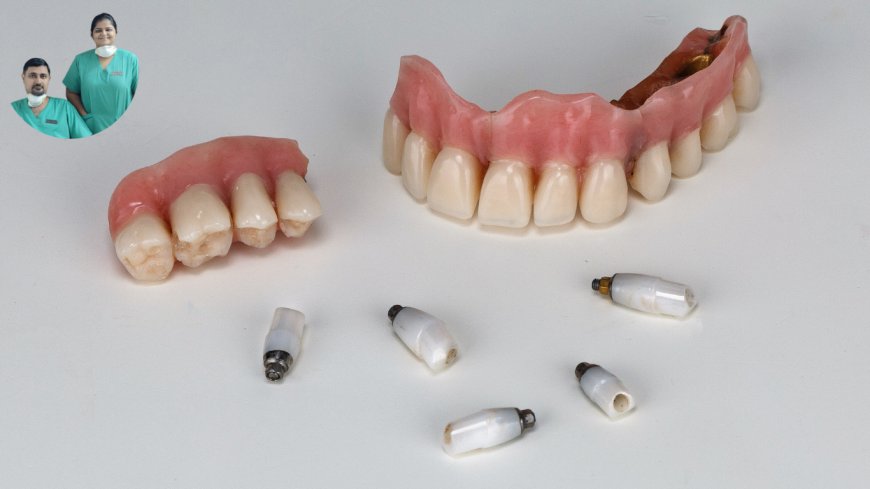
Corticobasal Implant for Fixed Denture: A Modern Solution for Atrophied Ridges
Losing teeth is a common problem, especially as we age, and it can be both uncomfortable and embarrassing. Thankfully, dental implants offer a way to replace missing teeth and restore smiles. But what if the jawbone has become too thin or weak to support traditional implants? This is where corticobasal implants (also called basal implants) come in, offering a lifeline for patients with atrophied ridges (shrunken jawbones). In this article, we’ll explore what dental implants are, the differences between conventional and basal implants, the challenges of treating atrophied ridges, and why Dr. Aakash Arora’s expertise is so valuable in this field.
What Are Dental Implants?
Dental implants are artificial tooth roots, usually made of titanium, placed into the jawbone to hold a replacement tooth or bridge. There are two main types:
- Endosteal Implants: These are the most common—small screws, cylinders, or blades placed directly into the jawbone.
- Subperiosteal Implants: These sit on top of the jawbone and are used when the bone height is too low for endosteal implants.
Both aim to provide a stable foundation for fixed or removable dentures, but they have different requirements and limitations.
Difference Between Conventional & Corticobasal (Basal) Implants
Conventional Implants
Conventional dental implants are placed within the bone in areas where it is strong and thick enough. They usually require a healing period (osseointegration), during which bone grows around the implant. This process can take several months and sometimes requires bone grafting (adding bone to the jaw) if the bone is too thin.
Basal Implants (Corticobasal Implants)
Basal implants are designed to anchor in the basal (deepest and strongest) part of the jawbone, not just the alveolar (top) bone. They can be safely placed even in areas where the jawbone has shrunk or deteriorated. Because they are placed in denser bone, they do not require lengthy healing periods—often, fixed teeth can be attached within 72 hours.
Atrophied Ridges: What Does That Mean?
Atrophied ridges happen when the jawbone loses width and height due to prolonged tooth loss, aging, or gum disease. This makes it hard to place conventional implants, which need a certain amount of strong bone to work.
Challenges for Dentists with conventional implants
- Bone Grafting Required: Often, patients need bone grafts, which are costly, involve surgery, and add months to the treatment process.
- Risk of Implant Failure: If the bone is too weak, conventional implants may not bond well and could fail.
- Delayed Healing: Patients may have to wait months before getting their new teeth.
- Patient Discomfort: Multiple surgeries and a long process can be difficult for patients, especially the elderly.
Why Basal Implants Are Often the Best Solution
Corticobasal implants bypass the need for bone grafting by anchoring directly into the dense, stable bone at the base of the jaw. This means:
- Immediate Loading: Patients can often get fixed teeth within 3 to 5 days, not months.
- No Bone Grafting: No need for extra surgeries to grow bone.
- Long-Term Stability: The dense basal bone offers excellent support, reducing the risk of implant failure.
- Comfort and Confidence: Patients enjoy restored function and aesthetics much faster.
- Safe in Diabetic Patients: Since Basal Implants are smooth surface implants, there is less chances of bacterial adhesion to these implants. So these implants are safer for Diabetic Patients as compared to rough surface Conventional Implants
Advantages and Limitations of Basal Implants
Advantages:
- Faster treatment: No long waiting periods or bone grafts.
- Suitable for atrophied ridges: Works where conventional implants fail.
- Fewer surgeries: Less invasive for the patient.
- Immediate function: Quick restoration of chewing and speech.
Limitations:
- Expertise Required: Placement technique is more complex and needs specialized training.
- Not for Every Case: Sometimes conventional implants are still the best choice.
- Long-Term Data: While successful, long-term outcome studies are still growing.
Dr. Aakash Arora: Expertise You Can Trust
Dr. Aakash Arora stands out as a specialist in both conventional and basal implantology. With years of hands-on experience, he understands when to use each type of implant for the best result. His expertise includes:
- Comprehensive Evaluation: Dr. Arora carefully examines each patient’s bone, health, and needs before recommending any treatment.
- Judicious Decision-Making: He is skilled in both conventional and basal implants, ensuring no patient is denied a solution due to bone loss.
- Patient-Centered Care: Dr. Arora explains options in simple language, helping patients make informed choices.
- Advanced Techniques: His training in the latest implant technologies means you receive modern, painless, and effective care.
The Bottom Line for Patients
If you’ve been told that you don’t have enough bone for dental implants, or that you’ll need lengthy bone grafting, corticobasal implants might be the answer. With this advanced technique, even patients with severely shrunken jawbones can enjoy the comfort and confidence of fixed teeth in days—not months.
Dr. Aakash Arora combines expertise in both traditional and basal implants, giving you a fair, informed choice tailored to your unique situation. Don’t let bone loss stop you from smiling—modern implant dentistry offers more solutions than ever before.
Takeaway:
Dental implants are not “one-size-fits-all.” If you have atrophied ridges, corticobasal implants—and an expert like Dr. Aakash Arora—can help you get back your smile quickly, safely, and with minimal discomfort.
Always consult a qualified implantologist to explore the best option for your needs.
If you need fixed teeth and have been informed that Dental Implant is not possible in your case, Consult Dr. Aakash Arora at:
Dr. Aakash Arora,
Oral & Maxillofacial Surgeon,
Dental Park - Dental & Maxillofacial Centre,
SD 375, Dental Park Road,
D Block, Shastri Nagar, Ghaziabad, Uttar Pradesh 201002
Phone number: +91-9639715167
website: https://dentalpark.in