


























Finding the Best Antifreeze Coolant for Your Car in the UAE - The Ultimate Guide

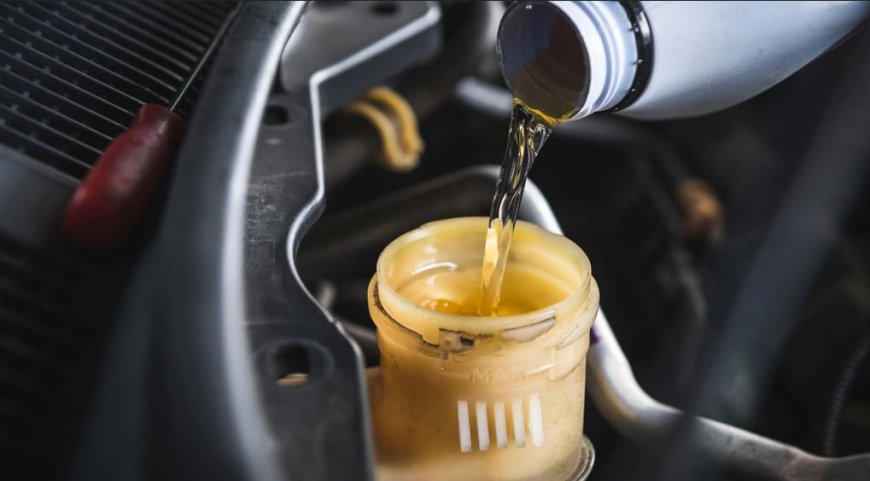
The sun beats down relentlessly on the Sheikh Zayed Road. Your engine purrs, working hard against the intense 45°C heat. In this extreme environment, your car’s cooling system isn't just a component; it's its lifeline. And at the heart of that system is a single, critical fluid: the antifreeze coolant.
Choosing the right coolant in the United Arab Emirates isn't a matter of preference; it's a necessity for vehicle longevity and performance. Using the wrong type can lead to catastrophic engine failure, costing thousands of Dirhams in repairs. This ultimate guide is designed to cut through the confusion. We’ll delve into the science of coolants, what makes the UAE’s climate so demanding, and how to select the best product to protect your investment. We will also explore why trusted brands like Nescol Lubricants have become a go-to choice for many discerning motorists and professionals across the Emirates.
Why Your Car’s Coolant is Its Desert Survival Kit
First, let's clarify a common misconception. "Antifreeze" and "coolant" are often used interchangeably, but they are technically different. Antifreeze is a concentrated glycol-based liquid that is mixed with water to create coolant. The name "antifreeze" is a misnomer in our hot climate, as its primary function here is to raise the boiling point of the engine coolant.
In the searing UAE heat, engines naturally run hotter. Without an effective coolant, the water in your system would boil away, leading to overheating. A high-quality coolant does three vital jobs:
-
Heat Transfer: It absorbs the immense heat generated by the engine and dissipates it through the radiator.
-
Boiling & Freezing Point Protection: It significantly raises the boiling point (preventing vapor lock and overheating) and lowers the freezing point (irrelevant here, but a property of the chemistry).
-
Corrosion Inhibition: It contains additives that protect the metals (aluminum, copper, cast iron) and plastics within your cooling system from corrosive degradation.
Decoding the Chemistry: Types of Antifreeze Coolant
Not all coolants are created equal. They are categorized primarily by their chemical technology, which dictates their longevity and compatibility. The three main types are:
1. Inorganic Acid Technology (IAT) - The Conventional Green Coolant
This is the older, traditional formula that contains silicate and phosphate additives to prevent corrosion. While effective, IAT coolants have a shorter service life, typically requiring replacement every two years or 50,000 km. You’ll often find these in older vehicles.
2. Organic Acid Technology (OAT) - The Modern Long-Life Coolant
OAT coolants use organic acids to inhibit corrosion. They are typically orange, red, or purple and are designed to last much longer—often up to 5 years or 200,000 km. They are silicate-free and are common in modern General Motors, Volkswagen, and many other European and American vehicles.
3. Hybrid Organic Acid Technology (HOAT) - The Best of Both Worlds?
As the name suggests, HOAT is a hybrid formula that combines the rapid-acting protection of silicates (from IAT) with the long-life properties of organic acids (from OAT). They are often yellow or turquoise and are frequently specified for Chrysler, Ford, and many BMW and Mercedes-Benz models. Some HOAT formulas are phosphate-free for Asian vehicles.
The Golden Rule: Compatibility is Key
The single most important step in selecting a coolant is to consult your vehicle’s owner’s manual. The manufacturer will specify the exact type of coolant technology required for your engine. Using the wrong type can lead to chemical incompatibility, which can gel up and clog your radiator and heater core, causing severe damage.
The UAE Climate: A Unique Challenge for Cooling Systems
The environmental conditions in the UAE place a unique and extreme burden on a coolant.
-
Extreme Heat: Ambient temperatures regularly exceed 40°C in summer, causing engine temperatures to soar. This demands a coolant with an exceptionally high boiling point.
-
High Humidity: Coastal humidity can accelerate corrosion if the coolant’s additive package is not robust enough.
-
Dust and Sand: Fine airborne particles can infiltrate the cooling system, potentially contaminating the coolant and abrading components. A good coolant must help suspend these contaminants until they can be filtered out.
-
Stop-and-Go Traffic: The driving patterns in cities like Dubai and Abu Dhabi mean engines spend long periods at low speeds with minimal airflow, increasing the risk of overheating.
A premium coolant designed for these conditions will have a superior additive package to combat corrosion, a high boiling point, and excellent thermal stability to maintain its properties over an extended lifespan.
How to Choose the Best Coolant for Your Car in the UAE
Beyond following your manufacturer’s specification, here are the critical factors to consider:
1. Quality and Certification: Look for coolants that meet or exceed industry standards set by organizations like the ASTM (American Society for Testing and Materials) and, crucially, your car manufacturer’s own specifications (e.g., GM Dex-Cool, Ford WSS-M97B44-D, Mercedes-Benz 325.0). These certifications are a guarantee of performance.
2. Pre-Diluted vs. Concentrate: You can buy coolant as a concentrate (which you must mix with distilled water in a 50:50 ratio) or as a pre-mixed, ready-to-use solution. For most everyday car owners in the UAE, pre-diluted is the convenient and foolproof option, eliminating the risk of mixing errors. Concentrate offers better value for money for fleet operators or workshops.
3. Brand Reputation and Trust: In a market flooded with options, trust is paramount. Established brands invest heavily in research and development to formulate products that meet the highest global standards. This is where a recognized name like Nescol Lubricants enters the picture. As a specialist with a focus on quality, they have developed antifreeze coolants that are engineered for performance and protection, ensuring that vehicle owners in the GCC region have access to products that can withstand the region's specific challenges. Their formulations are designed to provide excellent heat transfer and superior corrosion protection for all engine types.
4. Color is Not a Guide! While coolants have traditional colors, these are simply dyes and are not standardized. A green coolant could be IAT, HOAT, or something else entirely. Always read the label and specification, never judge by color.
The Importance of Professional Flushing and Replacement
Over time, the corrosion inhibitors in coolant deplete, and the fluid can become acidic. This is why regular changes are non-negotiable. A coolant change isn’t just a drain and refill; it should involve a complete system flush to remove all the old, depleted fluid and any contaminants. This is best left to a professional mechanic who has the equipment to perform a thorough flush and bleed the system of air bubbles, which can cause overheating.
Frequently Asked Questions (FAQs)
Q: Can I just top up my coolant with water?
A: In an absolute emergency, yes, but only with distilled water to get you to a mechanic. However, doing this regularly dilutes the antifreeze concentration, lowering its boiling point and reducing its corrosion protection, which is a recipe for disaster in the UAE.
Q: How often should I change my coolant in the UAE?
A: While you must follow your manufacturer's interval, the extreme climate often justifies more frequent changes. A good rule of thumb is to have it inspected annually and changed as per the severe service schedule in your manual, or approximately every 3-4 years for long-life coolants.
Q: Can I mix two different brands of the same type of coolant?
A: It is not recommended. Even if they are the same type (e.g., both OAT), the specific additive packages can differ and may react with each other, reducing effectiveness. It's always safest to stick with one brand and type for top-ups.
Q: What are the signs that my coolant needs changing?
A: Watch for signs like the coolant appearing rusty or muddy, your engine running hotter than normal, visible debris in the coolant reservoir, or a sweet smell inside the car (which can indicate a leak).
Conclusion: Invest in Protection for Peace of Mind
Your car is a significant investment, and its engine is its most valuable and complex component. In the crucible of the UAE's climate, safeguarding it with the correct, high-quality antifreeze coolant is one of the simplest yet most critical forms of preventative maintenance. It is not an area for compromise or guesswork.
By understanding the technology, respecting your manufacturer’s specifications, and choosing a premium, trusted product from a reputable supplier like Nescol Lubricants, you are not just buying a bottle of fluid. You are investing in long-term engine health, optimal performance, and ultimately, peace of mind on every journey—from the busy streets of Dubai to the long, open highways of the Emirates. Protect your engine, and it will reliably take you wherever you need to go.


