


























How to Make a Wastewater Treatment Plant Model: A Step-by-Step Guide to Understanding Wastewater Engineering
The development of WWTP models is a fun and educational tool to help understand the concepts and principles of wastewater treatment. From simply filtering the waste water, to integrating more complex technology such as micro-MBRs and bio-gas harvesters, model-building can promote new ideas and practical application. Amalgam Biotech’s training kits are a great tool for you to create reliable and replicable model systems for wastewater treatment.

Introduction
Wastewater treatment is an essential operation that preserves our water resources and habitats. Knowing how these intricate systems function is important for environmental engineers, students, people who are interested in them and society at large. One great way to better understand the concepts and functionality of a wastewater treatment plant is by constructing a model of a wastewater treatment plant. This science kit is a great hands-on module that can be used as a fun, educational project to demonstrate all the steps involved in purifying sewage. It also highlights the importance of innovation and sustainability in caring for our water sources.
Amalgam Biotech exists because we believe that the STEM model is an important one and we love to help kids learn about science, technology, engineering, and math by providing resources and kits that make learning about wastewater treatment firsthand and useable by everyone in their homes. Here on our blog, we will show you how to build a wastewater treatment plant model with common items and how you can use these projects to show youth technologies on the horizon and the power of young engineers to bring them to market.
Types of Wastewater Treatment Plants
Municipal Wastewater Treatment Model
A large number of cesspits are connected to a Wastewater Treatment Plant (WWTP) treating sewage generated by the urban area. Designing a model of a municipal plant The purpose of the model is to replicate the main stages of wastewater treatment using readily available materials. Following is the anatomy of a typical municipal treatment plant model:
Primary Screening: Begin with a basic form of filtration with a mesh or cloth to represent the coarse primary screening in which big materials such as plastics and solids are filtered out of the water.
Aeration Tank: Aeration is the addition of air into water that stimulates growth of bacteria responsible for digesting organic matter. As for a model, you can use a plastic container with a few small air pumps or straws to add air and to generate bubbles in the water.
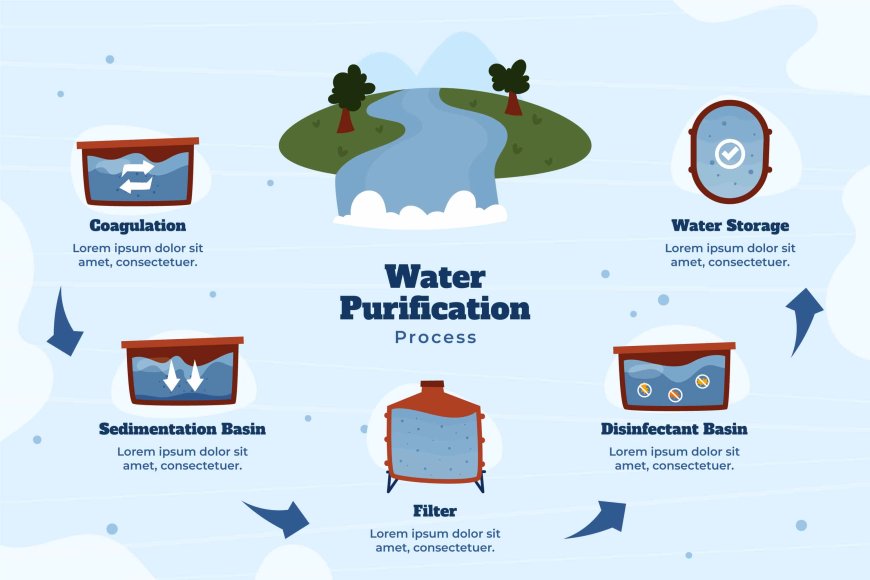
Clarification : This process is to settle suspended solids into the bottom of water. There are even simple models of a clarifier, which can be constructed by filling a tall glass (cup) with water and adding some alum (or some such other material) to witness floc (particles) settle to provide some clarity as time develops.
A scaled down model of a city's the municipal waste water treatment plant is a great way to learn about each treatment step and how they all work together to make the waste water clean.
Industrial Wastewater Treatment Model
Industrial wastewater treatment also requires dealing with more complicated effluents, such as heavy metals or toxic agents. In an industrial wastewater treatment facility model, you can include additional systems such as:
Carbon Filters: Organic contaminants in effluents are typically removed by carbon filtration. You can simulate this process in your own model with activated charcoal or similar filtrating material. This can be done by putting the material into a plastic tube and flowing water through it.
Chemical Treatment: Many other industries, such as textile and pharmaceutical, use chemicals and their wastewater will contain chemicals that must be treated to neutralize them, or to make their removal feasible. For a more serious model, you could employ non-toxic chemicals (such as vinegar or baking soda) to mimic how contaminants are neutralized.
Sludge Treatment: Sludge, the solid waste extracted from wastewater, is treated at some industrial facilities, too. It is possible to construct a model sludge digester in a small plastic container in which organic waste can decompose and generate biogas. Another option would be, placing balloons on the top of the container as an imagery how the methane gas is capured.
By developing an industrial model, youll get to know even more about specific systems and treatment processes utilized within industries such as food production, pharmaceuticals, or chemical manufacturing.
Punes Community Models
A number of schools and community organisations have adopted the construction of wastewater treatment units as an educational programme. In Pune, schools like Vidya Valley use Amalgam Biotech-funded kits to enable students to replicate local wastewater treatment plants, for instance. These models can be used for experiential learning while highlighting the practical application of environmental engineering.
These kinds of grassroots projects are vital in shaping the next generation of engineers and environmentalists. And not only do they help us to understand wastewater treatment, but they are also a great way to show the potential of creativity in addressing global water issues.
Emerging Technologies in Miniature
With the development of technology, wastewater treatment approaches have been improved. With the use of state of the art technology we can develop higher fidelity, more accurate and more useful models to simulate the operation of modern treatment works. Next, lets go through some of the new technologies that can be implemented in your model:
Micro-Membrane Bioreactors (Micro-MBRs)
Membrane bioreactors (MBRs) are one of the most promising technologies introduced in the field of wastewater treatment. JLS makes use of biological treatment coupled with membrane filtration to effectively treat and cleanse water. In small scale, you can model MBRs by coffee filters or something like that standing out for membrane scripts and separating sludge with water. This process is a very efficient way through which to clean wastewater and can be reduced in size can be used in a model.
SOLAR APCs: Photo-assisted processes based on Sun's power SOLAR ADVANCED OXIDATION PROCESSESSolar Advanced Oxidation Processes (Solar AOPs)
AOPs are consisting of strong oxidants (e. g. ultraviolet or ozone) to destroy pollutants in wastewater. You can simulate an AOP and show how they are destroying contaminants in your model with small UV lights or peroxide vials. AOPs powered by solar energy are even more sustainable, and by adding solar panels to your design you will also learn more about the implementation of renewable energy in wastewater systems.
Biogas Harvesters
Biogas, which is generated from anaerobic degradation of organic waste, is among the end products of wastewater treatment. To show biogas collecting, tie some balloons to the top of your models digester tanks. As the organic matter decomposes, the balloons inflate, mimicking the capture of methane gas. This model offers insight into the possibility of producing renewable energy from wastewater treatment.
When you combine the two it allows you to make your model better and also show people that you are applying advanced techniques to make wastewater treatment more efficient and sustainable.
Step-by-Step Development of the Model of the WWTP
Build a Wastewater Treatment Plant Model It is quite a challenge to come up with a good activity to demonstrate the process of wastewater treatment in class. Heres how to build such a model from scratch:
Collect Materials: Pick up common household items such as plastic Tupperware, mesh, straws, activated charcoal, plastic tubing and small pumps. These are your basic treatment plant units.
Design Your Model: Outline the various treatment stages you want to emulate. Include primary screening, aeration tanks and clarifiers, for a simplified municipal model. If youre constructing a larger industrial model, think about including filters, a chemical treatment system and a digester.
Construct the Filtration and Aeration Systems: Begin with the filtration and aeration stages. A plastic container could represent aeration tank and the water must transfer it easily among stages.
Test Your Model: After you have finished building your model, fill it with dirty (ideally nontoxic) water and see how the individual steps clean the water. Adjust for better filtration and aeration, if necessary.
Integrate State-Of-The-Art Technologies: If you have the desire to elevate your model a notch higher, you can integrate advanced technologies such as micro-MBRs, solar AOPs, and biogas harvesters. This not only will help to make your model more precise, but also you will get to know about current trends in wastewater treatment.
Conclusion
Constructing a model of a wastewater treatment plant is an amusing and a very instructive task to discover the complexity of the environmental engineering. Simulate filtration, aeration, and biogas harvest and you will have a better idea of how wastewater is treated and what new technologies are changing the game.
At Amalgam Biotech, we specialize in providing high-quality wastewater treatment solutions tailored to meet the needs of industries and communities alike. If youre looking for advanced, customized wastewater treatment technologies, were here to help. Visit Amalgam Bioteh to learn more about how we can support your wastewater treatment needs and enhance your environmental sustainability efforts.


