


























How Clean Room Doors Help Maintain ISO Certification Standards
Discover how clean room doors play a critical role in ISO 14644 compliance. Learn how airtight sealing, durable materials, and Doorwin Technologies solutions help maintain certification.

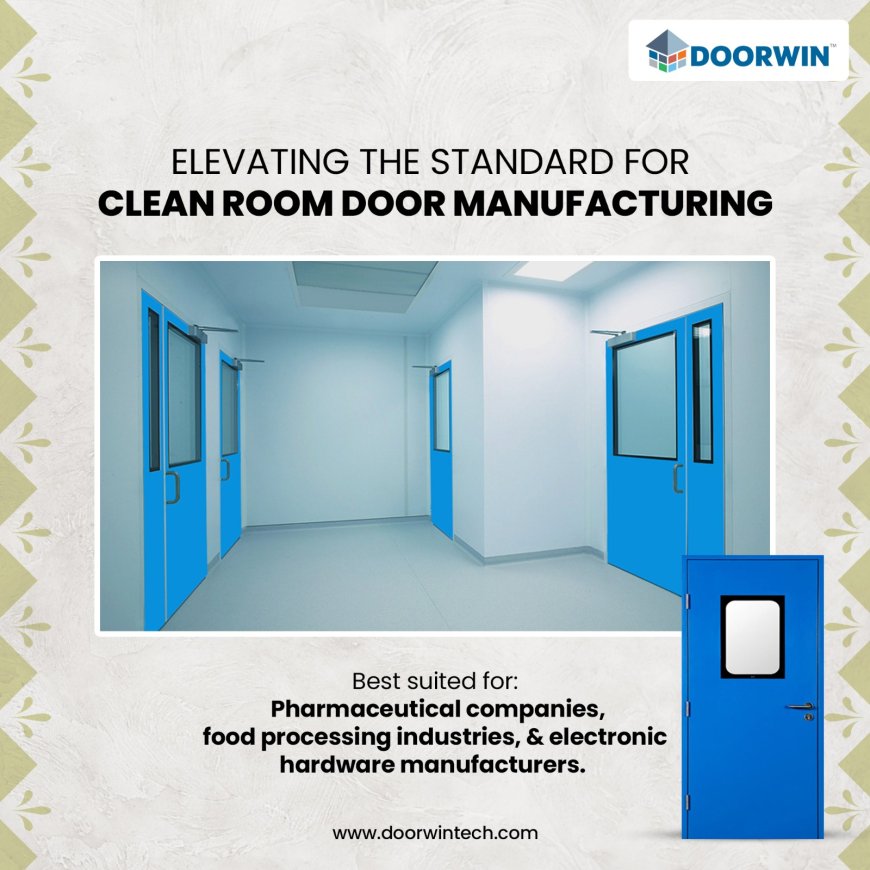
ISO certification is the gold standard for clean rooms. Whether it’s pharmaceutical production, biotech research, or semiconductor manufacturing, compliance with ISO 14644 standards proves that your facility meets strict contamination control requirements.
While HEPA filters and HVAC systems often take the spotlight, clean room doors are just as critical in maintaining certification. The right doors ensure pressure stability, minimize contamination risk, and support audits and inspections.
The Role of Clean Room Doors in ISO Compliance
1. Contamination Control
ISO 14644 sets particle count limits based on clean room classification. A poorly sealed or low-quality door can allow unfiltered air and particles to enter. Clean room doors with airtight seals, flush surfaces, and durable materials prevent these leaks, helping the facility maintain ISO-approved cleanliness levels.
2. Pressure Differentials
Many ISO-certified clean rooms rely on positive or negative pressure to control airflow. If a door leaks, pressure balance is lost, undermining compliance. Hermetic and gasket-sealed doors are designed to keep air pressure stable and maintain certification.
3. Durability Under Strict Cleaning
ISO standards require rigorous cleaning protocols. Regular doors degrade under constant chemical exposure, while stainless steel or powder-coated clean room doors withstand frequent sanitation without particle shedding or warping.
4. Documentation and Audits
During ISO audits, doors are often inspected for materials, sealing, and maintenance records. High-quality clean room doors with certified performance data simplify compliance reporting and reduce the risk of audit failures.
5. Operational Efficiency
ISO compliance isn’t only about cleanliness—it’s about consistency. Automated clean room doors reduce human error, ensuring reliable operation and minimizing contamination events.
FAQs About Clean Room Doors and ISO Standards
Q: Do all clean rooms need hermetic doors for ISO certification?
A: Not always. While hermetic doors are often required in high-class clean rooms, swing or sliding doors may be acceptable in lower ISO classes if they meet sealing and material standards.
Q: Can an uncertified door cause audit failures?
A: Yes. Non-compliant doors are a common cause of audit issues, as they can compromise pressure stability and cleanliness levels.
Q: How often should clean room doors be inspected for ISO compliance?
A: Doors should be checked at least quarterly for seal integrity, frame alignment, and surface wear.
Q: Are clean room doors customizable to meet ISO standards?
A: Absolutely. Doors can be tailored in size, materials, and automation features to align with your clean room’s ISO classification.
Q: Do clean room doors need to be documented in compliance reports?
A: Yes. ISO audits often require proof of materials, performance, and maintenance history for all clean room components, including doors.
Conclusion
Maintaining ISO certification requires attention to every detail in your clean room—including the doors. From airtight seals to compliance-ready materials, the right doors support contamination control, pressure stability, and audit success.
Doorwin Technologies delivers precision-engineered clean room doors designed to help facilities achieve and maintain ISO standards. With proven reliability, compliance documentation, and expert support, Doorwin is the trusted choice for facilities that can’t afford to compromise.


