Beyond Hype: The Practical Merge of Zero-Knowledge Proofs and AI

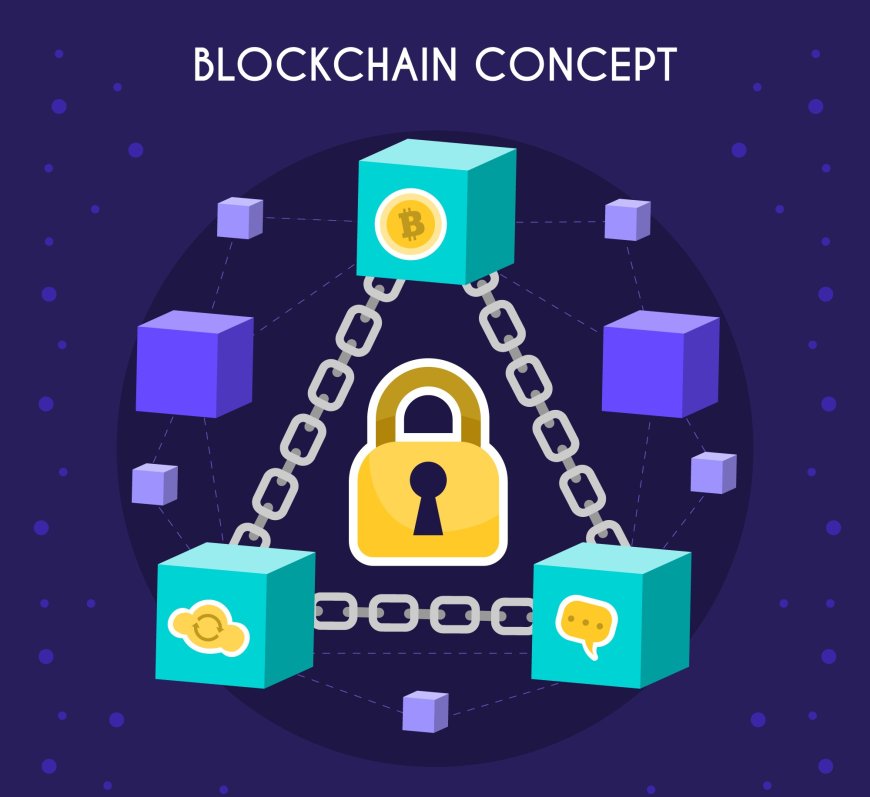
The conversation around artificial intelligence and blockchain often gets caught in waves of speculation, but a quieter, more practical revolution is underway. The integration of zero knowledge proof (ZKP) technology with AI systems is reshaping how trust, privacy, and intelligence can coexist in digital ecosystems. This is not just theory—it is the next stage of applied cryptography and machine learning, moving beyond hype into real-world transformation.
Bridging Transparency and Privacy
One of the biggest challenges in combining AI with blockchain is the tension between transparency and privacy. Blockchain is designed to be radically open, where every transaction is visible and verifiable. AI, on the other hand, depends on vast amounts of data, much of which is sensitive. Reconciling these conflicting needs has long been a stumbling block.
This is where zero knowledge proof technology steps in. A ZKP allows one party to prove they know a piece of information without disclosing the information itself. Applied to AI, this means models can train on sensitive data and provide verifiable outcomes without exposing the underlying details. It’s a practical solution that ensures both trust and confidentiality.
Making AI Verifiable on Blockchain
AI decisions can often feel like black boxes, raising concerns about fairness and accountability. When AI operates within blockchain systems, these concerns intensify, because the integrity of decentralized systems depends on provable correctness. With ZKP, AI outputs can be validated without revealing either the raw data or the proprietary logic.
For example, an AI model predicting credit risk could provide results on a blockchain network. The decision-making process would be backed by a zero knowledge proof, ensuring participants that the prediction followed the agreed-upon rules, without exposing personal financial information or the internal structure of the model. This move beyond hype toward verifiable trust has profound implications for industries like finance, governance, and healthcare.
Enabling Collaboration Without Data Sharing
One of the most promising applications of ZKP in AI is enabling collaborative learning across organizations. Traditional AI requires data to be pooled in centralized systems, raising concerns about ownership, privacy, and misuse. With zero knowledge proof technology, multiple entities can contribute to building a shared AI model while keeping their datasets private.
For instance, hospitals could collectively train a medical diagnostic system without ever exchanging patient records. Each hospital’s contribution would be proven correct through ZKPs, ensuring that the final model benefits from diverse data while respecting patient confidentiality. This creates a powerful path forward for industries where privacy is paramount but collaboration is essential.
Scaling AI with Privacy Guarantees
As AI and blockchain systems grow, scalability becomes a key issue. The traditional approach of verifying computations directly on-chain can be computationally heavy and inefficient. Zero knowledge proof solves this by allowing complex AI computations to be proven succinctly, meaning a vast amount of processing can be verified with minimal blockchain overhead.
This efficiency not only reduces costs but also ensures that blockchain AI systems can expand without sacrificing privacy or performance. In practice, ZKP makes it feasible to integrate large-scale AI models into decentralized environments where every step needs to be trustworthy.
From Hype to Reality
The merge of AI and zero knowledge proof is more than a theoretical concept—it’s already shifting into real-world applications. Healthcare providers, financial networks, and supply chain systems are beginning to explore how ZKPs can support AI-driven decision-making without breaching confidentiality. While challenges remain, particularly in terms of computational costs and accessibility, the trajectory is clear: ZKPs are moving AI on blockchain from experimental hype to practical deployment.
The real promise lies in how these technologies complement each other. Blockchain provides transparency, AI brings intelligence, and ZKP ensures privacy and verifiability. Together, they are setting the stage for a digital economy where trust does not depend on exposure, but on cryptographic assurance.
Conclusion: A Practical Revolution
The intersection of AI and blockchain has been hyped for years, but the introduction of zero knowledge proof (ZKP) technology is turning that vision into reality. By enabling privacy-preserving, verifiable intelligence, ZKPs are transforming blockchain AI from a futuristic concept into a practical tool for industries worldwide.
This shift goes beyond buzzwords and speculation—it represents a foundational step toward systems that are simultaneously intelligent, decentralized, and private. The unseen strength of ZKP is that it allows AI to function where both transparency and confidentiality are non-negotiable. In doing so, it quietly powers the move from hype to reality, ensuring that the future of AI on blockchain is built on a foundation of trust.