


























Why BCC CNC Milling Is a Trusted Partner for High-Precision Spare Parts
Trusted precision CNC machining partner for critical spare parts. Advanced 5-axis capabilities, aerospace-grade quality, and reliable delivery across automotive, medical & more.

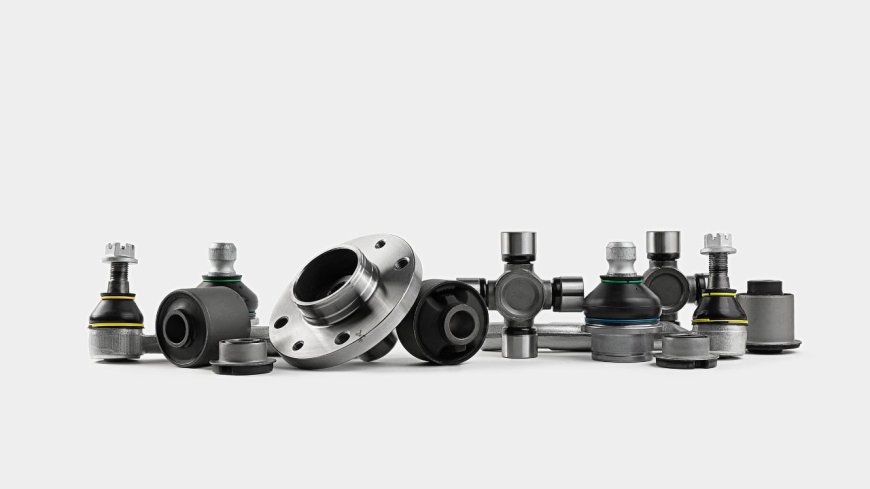
When industrial equipment breaks down, every minute of downtime costs money. Manufacturing facilities, medical institutions, and aerospace companies can't afford to wait weeks for replacement components or risk installing substandard parts that might fail again. This reality has made finding a reliable precision machining partner not just important—it's absolutely critical for business continuity.
In today's competitive industrial landscape, where tolerances are measured in microns and quality standards leave no room for error, choosing the right manufacturing partner can mean the difference between seamless operations and costly shutdowns. BCC CNC Milling has emerged as a go-to solution for companies worldwide who need precision-engineered spare parts they can depend on without compromise.
But what exactly transforms a machining shop into a trusted partner? It goes far beyond simply owning expensive equipment or claiming precision capabilities. True partnership is built on consistent delivery, technical expertise, transparent communication, and an unwavering commitment to quality that stands up under pressure.
The Foundation of Precision Manufacturing
High-precision CNC milling isn't just about cutting metal to shape. It's about controlling every variable in the manufacturing process to achieve tolerances that often seem impossibly tight. When specifications call for accuracy within five-thousandths of a millimeter (±0.005mm), there's zero margin for error. A single miscalculation, a moment of inattention, or poorly maintained equipment can render an entire batch of components unusable.
Industries like aerospace, medical device manufacturing, and semiconductor production have pushed the boundaries of what's possible in precision machining. Aircraft components must withstand extreme temperatures and stresses while maintaining structural integrity. Medical imaging equipment requires parts that work together with microscopic precision to deliver accurate diagnostic results. Semiconductor manufacturing chambers need vacuum-tight seals that perform reliably at incredibly low pressure levels.
This is where advanced CNC technology makes all the difference. Modern five-axis machining centers can approach a workpiece from virtually any angle, creating complex geometries that would be impossible with traditional three-axis machines. But technology alone isn't enough. It takes experienced operators who understand how different materials behave under various cutting conditions, engineers who can optimize tool paths for both precision and efficiency, and quality control specialists who catch potential issues before they become problems.
Technical Capabilities That Deliver Results

Walking into a well-equipped precision machine shop reveals the backbone of manufacturing excellence. At Baichuan Precision, over thirty CNC machines fill a ten-thousand-square-meter facility, each one serving a specific purpose in the production ecosystem. Large vertical gantry mills with work envelopes measuring 6,500mm by 4,200mm by 1,800mm handle oversized components that many competitors simply can't accommodate. This capacity opens doors for clients who need large structural parts machined to exacting standards.
But size capability is just one piece of the puzzle. The real magic happens when multi-axis machining centers tackle intricate components with complex internal features. Five-axis simultaneous machining allows cutting tools to maintain optimal angles throughout the entire operation, resulting in superior surface finishes and dimensional accuracy. This capability proves essential when manufacturing aerospace structural components where wall thickness variations must stay within fifty microns, or medical device parts where internal passages require smooth, burr-free finishes.
Material expertise represents another critical dimension of technical capability. Aluminum alloys machine differently than titanium. High-strength steels require different cutting parameters than stainless steel. Engineering plastics behave entirely unlike metals under cutting forces. A truly capable precision machining partner doesn't just work with these materials—they understand them intimately. They know which grades provide the best combination of machinability and performance for specific applications. They can recommend material substitutions that improve manufacturability without compromising function.
The inspection and quality assurance infrastructure supporting production operations separates professional operations from amateur ones. Coordinate measuring machines (CMM) verify dimensions with accuracy levels reaching half a micron (±0.0005mm). Profile projectors confirm complex contours match engineering drawings. Surface roughness testers ensure finishes meet specified requirements. Material certifications provide full traceability from raw stock through finished components. This comprehensive quality framework means clients receive parts they can install with confidence.
Serving Diverse Industries with Specialized Solutions
Precision spare parts aren't one-size-fits-all commodities. Each industry brings unique requirements, performance demands, and regulatory considerations that shape how components must be designed and manufactured.
In the automotive sector, transmission housings exemplify the challenges of precision machining. These components must maintain gear engagement tolerances within twenty-five microns while withstanding high temperatures, intense vibration, and constant exposure to lubricating oils. Internal cavities require special surface treatments to prevent corrosion. Complex internal structures demand five-axis machining capabilities to reach every feature without compromising structural integrity. Whether supporting automatic or manual transmission systems, these precision-machined aluminum and steel housings perform reliably under demanding conditions.
Marine applications present entirely different challenges. Mast fittings and rigging components must handle enormous loads—sometimes exceeding fifty tons—while resisting corrosion from constant saltwater exposure. Aluminum and titanium alloys provide the strength-to-weight ratios sailors need, but only when machined to precise tolerances. Load-bearing connection points require accuracy within fifty microns to distribute forces properly. Anti-corrosion anodized finishes protect against the harsh marine environment. When lives depend on equipment reliability during ocean voyages, precision machining isn't optional—it's mandatory.
Semiconductor manufacturing equipment pushes precision to its absolute limits. Vacuum chambers must maintain incredibly low pressure levels—down to 10^-9 Torr in some applications. This requires manufacturing from high-purity stainless steel or aluminum alloys with internal surface roughness better than 0.4 micrometers. Electropolished interior walls minimize outgassing that could contaminate processes. Seal surfaces must be perfectly flat and smooth to maintain vacuum integrity. With maximum processing dimensions accommodating chambers up to 6.5 meters long, few facilities can handle these specialized fabrication requirements.
Aerospace structural components represent perhaps the most demanding precision machining applications. Lightweight yet incredibly strong, these parts utilize aerospace-grade aluminum and titanium alloys machined with wall thickness tolerances within fifty microns. Five-axis machining centers create complex curved surfaces that optimize strength while minimizing weight. Helical milling techniques for hole features increase fatigue strength by thirty percent compared to conventional drilling. Every component comes with complete material traceability reports and stress-relief certification, meeting strict aviation authority requirements.
Medical imaging equipment like CT scanners requires precision that directly impacts diagnostic accuracy. High-density tungsten alloy collimators and detector frames need five-axis machining to achieve complex internal structures. Detector array positioning must be accurate within five microns—any deviation degrades image quality. Rotation ring bearing housings made from specialized aluminum alloys require dynamic balancing to G0.4 precision standards. When these components spin at four revolutions per second, even microscopic imbalances create problems. Precision machining ensures stable, reliable performance that extends equipment service life.
Building Trust Through Consistent Excellence

Technical capabilities provide the foundation, but trust is built through consistent execution and reliable partnership. Companies don't become trusted partners overnight—they earn that designation through years of on-time deliveries, accurate products, responsive communication, and honest dealings.
Consistency separates reliable suppliers from those who deliver great results occasionally but disappoint when it counts. Manufacturing facilities operate on schedules where delays cascade through production lines, creating compounding problems. A spare part that arrives a week late doesn't just cost one week of downtime—it can halt entire production operations, forcing expensive overtime or missed customer commitments. Trusted partners understand this reality and structure their operations to meet commitments reliably. They build buffer time into schedules, maintain communication about progress, and proactively address potential delays before they impact deliveries.
Engineering support adds tremendous value beyond simply machining parts to drawings. Design for manufacturability consultation helps clients optimize component designs for both performance and production efficiency. Sometimes simple design modifications can significantly reduce manufacturing costs or improve reliability without compromising function. Experienced engineers spot potential problems during the quoting stage, saving clients from discovering issues after production begins. This collaborative approach transforms the supplier relationship from transactional to strategic partnership.
Transparent communication might seem basic, but it's surprisingly rare in manufacturing. Many suppliers disappear after accepting orders, leaving clients wondering about progress until parts finally arrive—or don't. Professional partners provide regular updates, respond promptly to inquiries, and communicate honestly about challenges or delays. Clear pricing eliminates surprise charges. Accurate lead time estimates help clients plan confidently. When problems occur, trusted partners acknowledge them quickly and work toward solutions rather than making excuses.
Flexibility matters enormously in today's dynamic manufacturing environment. Not every project involves high-volume production runs. Sometimes companies need rapid prototypes for design validation. Other times they require small batches of replacement parts for aging equipment. Rush orders happen when critical equipment fails unexpectedly. Rigid suppliers with high minimum order quantities and inflexible schedules force clients to look elsewhere. Adaptable partners accommodate diverse requirements, scaling production appropriately whether manufacturing single prototypes or thousand-piece production runs.
Quality That Stands Up to Scrutiny
Quality assurance in precision machining goes far beyond final inspection. It starts with capable equipment properly maintained and extends through every stage of production. Preventive maintenance schedules keep machines performing at peak accuracy. Regular calibration of inspection equipment ensures measurements remain trustworthy. Operator training programs develop skills and reinforce quality-focused practices. Statistical process control monitors production trends to catch developing issues before they produce defective parts.
First article inspection protocols verify new setups produce parts matching specifications before full production begins. This catches programming errors, fixturing problems, or material issues early when corrections are easy and inexpensive. Coordinate measuring machines compare actual dimensions against CAD models with micron-level precision. Optical and laser scanning systems verify complex surfaces that would be difficult to measure with traditional tools. Surface finish measurements confirm texture specifications are met. Material certifications document the actual alloy composition and heat treatment of raw materials.
Industry-specific certifications demonstrate commitment to recognized standards. ISO quality management systems provide frameworks for consistent operations and continuous improvement. Industry-specific certifications like AS9100 for aerospace or ISO 13485 for medical devices show capability to meet heightened requirements those sectors demand. Welding certifications to ASME and AWS standards document qualified procedures and certified welders. These credentials aren't just wall decorations—they represent audited, verified capabilities that customers can depend on.
Documentation and traceability complete the quality picture. Every component includes inspection reports showing measured dimensions. Material certifications trace raw materials back to mill test reports. Process documentation records manufacturing parameters. For critical applications in aerospace, medical, or defense industries, this paper trail proves essential for regulatory compliance and quality audits. Comprehensive documentation also enables investigation if problems occur, helping identify root causes and implement corrective actions.
Technology Investment for Future Success
Manufacturing technology evolves constantly, and companies that fall behind technologically struggle to compete. Modern CNC control systems offer capabilities that were science fiction a generation ago. Conversational programming simplifies setup for complex parts. Adaptive control systems automatically adjust cutting parameters to maintain optimal conditions as tool wear progresses. High-speed machining techniques dramatically reduce cycle times while improving surface finishes. Thermal compensation corrects for dimensional changes as machines warm up during operation.
Automation and Industry 4.0 integration represent the current frontier in manufacturing advancement. Robotic loading systems keep machines running lights-out during unmanned shifts. Automatic tool changing systems reduce setup times and enable more efficient production. Real-time monitoring systems track machine performance, sending alerts when problems develop. Data analytics identify optimization opportunities by analyzing production history. These technologies improve efficiency, reduce costs, and enhance quality consistency.
Sustainability considerations increasingly influence manufacturing decisions. Energy-efficient machine tools reduce electrical consumption and operating costs. Coolant recycling systems minimize waste and environmental impact. Efficient material utilization reduces scrap and raw material costs. Responsible sourcing practices ensure materials come from ethical suppliers meeting environmental standards. While sustainability efforts benefit the environment, they also make good business sense by reducing operating costs and improving corporate reputation.
Value Beyond Price
When sourcing precision spare parts, price seems like the obvious decision factor. But focusing exclusively on lowest price often proves shortsighted and expensive. A component that costs twenty percent less but fails prematurely creates far higher total costs than paying fair prices for reliable quality. Downtime expenses dwarf material costs for most industrial operations. A manufacturing line producing thousands of dollars of product per hour can't afford equipment failures from substandard replacement parts.
Long-term value comes from parts that perform reliably over their entire service life. Precision machining to proper tolerances ensures components fit correctly and function as designed. Appropriate material selection provides necessary strength, corrosion resistance, or temperature capability. Quality heat treatment delivers optimal mechanical properties. Proper surface finishes reduce wear and extend service intervals. These factors determine actual lifetime value, not just initial purchase price.
Competitive pricing doesn't mean cheapest—it means fair value for quality delivered. Efficient production practices, optimized machining strategies, and economies of scale enable cost-effective pricing without compromising quality. Established suppliers with proven processes avoid the learning curve expenses that inflate costs at inexperienced shops. Material purchasing relationships secure better raw material prices. All these factors enable competitive pricing while maintaining the quality standards customers require.
Partnership That Delivers Peace of Mind
Selecting a precision machining partner isn't just a purchasing decision—it's choosing who you'll trust with critical components that keep your operations running. That decision impacts equipment reliability, maintenance costs, production schedules, and ultimately business success. The right partner becomes an extension of your engineering and maintenance teams, contributing expertise and capacity that complements internal capabilities.
Twenty-plus years of manufacturing experience brings perspective that newer operations simply can't match. Engineers who've solved thousands of machining challenges develop intuitive understanding of what works and what doesn't. Operators who've machined every alloy know exactly how materials behave under various conditions. Quality specialists who've investigated countless issues recognize warning signs before problems develop. This accumulated knowledge creates capabilities that can't be purchased—only earned through decades of experience.
Global supply network reliability means consistent delivery regardless of where customers operate. European companies receive the same quality and service as Asian customers. American facilities get identical attention as domestic Chinese clients. Time zone differences don't create communication gaps. Shipping logistics are handled professionally whether components travel across town or across oceans. Geographic diversity doesn't dilute service quality—it extends reach while maintaining standards.
When equipment breaks down and production hangs in the balance, you need more than just a parts supplier. You need a trusted partner who understands what's at stake, has the technical capability to deliver precision components that perform reliably, and maintains the operational excellence to meet commitments consistently. That's what separates adequate vendors from exceptional partners—and it's what companies worldwide have discovered makes all the difference when precision matters most.
Frequently Asked Questions
What tolerance levels can be achieved in precision CNC machining?
Modern CNC machining centers routinely achieve tolerances within ±0.005mm (five microns) for critical dimensions, with specialized inspection equipment verifying accuracy to ±0.0005mm (half a micron). Actual achievable tolerances depend on factors including part geometry, material properties, size, and feature locations. Tighter tolerances are possible for specific features using specialized techniques, though they increase manufacturing complexity and cost. Experienced manufacturers help optimize tolerance specifications, applying tight controls only where functionally necessary while using more economical tolerances elsewhere.
How long does it typically take to manufacture custom precision spare parts?
Lead times vary significantly based on component complexity, material availability, current production schedules, and quantity required. Simple parts machined from common materials might be completed within one to two weeks. Complex components requiring specialized materials, extensive machining operations, or particular surface treatments typically need three to five weeks. Rush services can accelerate critical orders, though expediting may increase costs. Providing complete specifications upfront and maintaining clear communication throughout the project helps ensure accurate lead time estimates and on-time delivery.
What materials can be machined for precision spare parts?
Professional precision machining facilities work with extensive material ranges including aluminum alloys (2000, 6000, and 7000 series), steel grades (carbon, alloy, stainless, tool steels), titanium alloys, copper and brass alloys, exotic metals like Inconel and Hastelloy, and engineering plastics including PEEK, Delrin, and nylon. Material selection depends on application requirements such as strength, weight, corrosion resistance, temperature capability, and electrical properties. Experienced engineers assist with material selection, sometimes recommending alternatives that improve manufacturability or reduce costs while meeting performance requirements.
Can you reproduce obsolete parts when original drawings aren't available?
Reverse engineering services can recreate components even without original documentation. The process starts with careful measurement and 3D scanning of existing parts to create accurate CAD models. Engineers analyze material composition, surface treatments, and manufacturing features to develop production specifications. Prototypes are manufactured and validated against original parts before full production begins. This capability proves invaluable when maintaining older equipment where original manufacturers no longer exist or documentation has been lost over decades of operation.
What quality certifications and documentation are provided with precision parts?
Comprehensive documentation packages typically include dimensional inspection reports showing measured values for all critical features, material certifications tracing raw materials to mill test reports, process documentation recording manufacturing parameters and procedures, and photographic evidence when specified. Industry-specific certifications such as ISO 9001 quality management, AS9100 for aerospace applications, or ISO 13485 for medical devices demonstrate verified capabilities. Welding operations include procedure qualifications and welder certifications to ASME or AWS standards. This documentation supports regulatory compliance, quality audits, and traceability requirements across various industries.


