How CNC Machining Improves Product Quality and Efficiency
CNC Machining not only enhances immediate production quality and efficiency but also ensures long-term reliability.

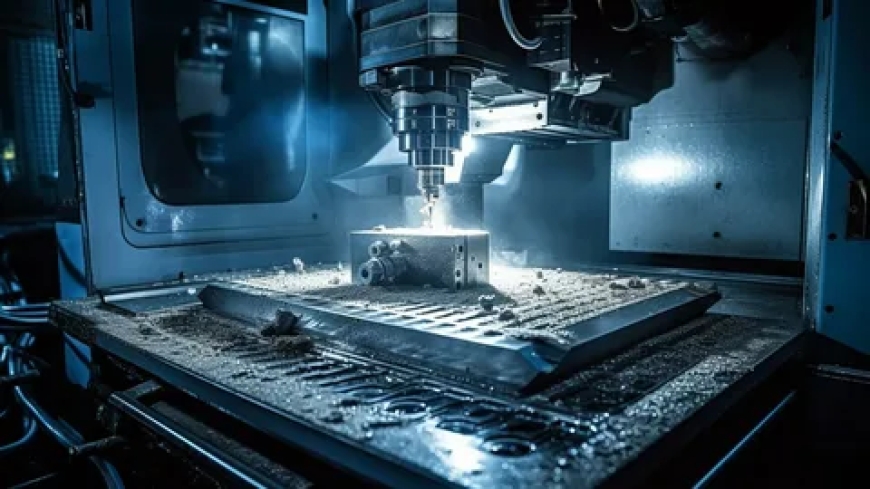
One of the most significant advantages of CNC Machining is its ability to deliver unmatched precision. Unlike traditional manual machining, which heavily relies on human skill and consistency, CNC Machining is controlled by computer software that dictates every movement of the tool with micrometer-level accuracy. This ensures that each product manufactured adheres to exact specifications and tolerances, minimizing errors that could compromise the final product’s performance. For industries like aerospace, automotive, and medical, where accuracy is critical, CNC Machining guarantees the reliability and safety of the components produced.
Moreover, CNC Machining allows manufacturers to replicate the same part consistently across large production runs. Once a design file is created and programmed into the system, the machine can reproduce identical units without variation. This consistency significantly improves product quality, as there is no risk of deviation caused by fatigue or human error. High precision combined with repeatability not only enhances product performance but also strengthens brand trust among customers who expect uniform excellence.
Enhancing Production Efficiency
CNC Machining improves efficiency by streamlining production processes and reducing the need for manual intervention. Traditional machining methods often require constant monitoring, adjustments, and setup time, which slows down manufacturing cycles. In contrast, CNC Machining operates on pre-programmed instructions that allow machines to run continuously with minimal supervision. This automated approach minimizes downtime, accelerates production, and enables companies to meet tight deadlines without sacrificing quality.
Additionally, CNC Machining integrates seamlessly with other advanced manufacturing technologies, such as CAD (Computer-Aided Design) and CAM (Computer-Aided Manufacturing) systems. This integration shortens the design-to-production cycle, enabling manufacturers to move from prototypes to finished products much faster. By reducing bottlenecks in the workflow, businesses can increase output while maintaining high levels of accuracy and efficiency. This boost in productivity directly contributes to reduced costs and improved profit margins, making CNC Machining an invaluable asset in modern manufacturing.
Improving Material Utilization and Reducing Waste
CNC Machining also plays a crucial role in optimizing material usage, which directly impacts both efficiency and cost savings. Traditional machining often results in significant material waste due to imprecise cutting and frequent errors. However, CNC Machining follows programmed paths with exceptional accuracy, ensuring minimal material removal and optimal use of raw resources. This precision not only lowers production costs but also contributes to sustainable manufacturing by reducing scrap.
Furthermore, CNC Machining allows manufacturers to experiment with a wide variety of materials, including metals, plastics, composites, and even ceramics, without compromising accuracy. This versatility ensures that materials are used effectively and tailored to the specific requirements of the final product. By maximizing material utilization and reducing waste, companies can achieve a more eco-friendly production process while simultaneously enhancing efficiency and lowering overall manufacturing costs.
Flexibility and Adaptability in Production
Another way CNC Machining improves product quality and efficiency is through its flexibility and adaptability. Modern CNC machines can be quickly reprogrammed to manufacture different parts, allowing manufacturers to switch between projects with minimal downtime. This adaptability makes it possible to respond to changing customer demands and market trends without the need for costly retooling. Such flexibility ensures continuous productivity and makes businesses more competitive in fast-paced industries.
CNC Machining also supports the production of complex geometries that would be difficult or impossible to achieve using manual techniques. This capability enables manufacturers to create intricate designs with high precision, pushing the boundaries of innovation. By delivering products that are both complex and accurate, CNC Machining helps businesses differentiate themselves from competitors and meet the increasingly sophisticated demands of consumers across industries.
Ensuring Long-Term Reliability and Cost-Effectiveness
CNC Machining not only enhances immediate production quality and efficiency but also ensures long-term reliability. Machines controlled by advanced software experience less wear and tear compared to manual machining, as the process is more controlled and predictable. This extends the lifespan of tools and machinery, reducing the need for frequent maintenance and replacements. Consistent performance over time guarantees stable production, minimizing disruptions and unexpected costs.
From a cost-effectiveness perspective, CNC Machining significantly reduces labor costs while increasing output. Fewer operators are needed to manage machines, and with automation handling repetitive tasks, workers can focus on higher-value roles such as design and quality control. Although the initial investment in CNC equipment may be high, the long-term benefits—higher productivity, better product quality, reduced waste, and lower operational costs—make it a highly profitable choice for manufacturers. In essence, CNC Machining is not just a tool for improving efficiency but also a strategic investment for sustainable growth.